Spinner Ring UK 2026: Silver Fidget Ring Guide

Spinner Ring UK: The Complete Guide to Motion Rings
Everything you need to know about spinner rings, how the spinning mechanism works, which materials last longest, and how to find the right fit in the UK.
If you have ever found yourself turning a ring around your finger during a stressful meeting or a long commute, you already understand the appeal of a spinner ring. These motion rings are designed to do what your fingers do naturally: spin.
A spinner ring UK is any ring with an outer band or track that rotates freely around a fixed inner band. The sensation is surprisingly satisfying, and for many people it has become a subtle, wearable habit that helps manage anxious energy or restless hands throughout the day.
Search interest in spinner rings is growing steadily in the UK, driven by a wider conversation around wearable wellness and mindful movement. But with so many types and materials available online, knowing what to look for before you buy can save you money and disappointment.
This guide covers everything from the origins of the spinner ring to the best materials for daily wear, sizing tips, care advice, and which styles offer the most satisfying spin. Whether you are shopping for yourself or looking for a thoughtful gift, you will find answers here.
In This Guide
- The History of Spinner Rings
- How the Spinning Mechanism Works
- Types of Spinner Rings Explained
- Materials Compared: Silver, Steel, Titanium
- Why PVD-Coated Steel is the Daily Wear Winner
- Sizing Guide for Spinner Rings
- Wearing Spinner Rings in a Stack
- Moonela Rings with Spinner-Like Qualities
- Care and Maintenance Tips
- Frequently Asked Questions
The History of Spinner Rings
The spinner ring has roots in Tibetan culture, where prayer wheels have been used for centuries as a form of moving meditation. A prayer wheel is a cylindrical device on a spindle containing scrolls of mantras. Spinning it is considered equivalent to reciting the prayers inscribed inside, allowing practitioners to accumulate merit during everyday tasks.
Jewellers adapted this idea into wearable form. The earliest ring versions, sometimes called meditation rings or worry rings, were crafted in Tibet and Nepal and brought back to the West by travellers in the 1970s and 1980s. Traditional examples were often made from sterling silver with decorative outer bands etched with Sanskrit symbols, spiral motifs, or braided wire.
By the 1990s, Western jewellery brands had taken notice. The spinning ring was reframed for a mainstream audience not just as a spiritual object but as a stress relief tool, a wearable fidget. This framing proved remarkably durable because it is grounded in something real: the repetitive, gentle motion of spinning the outer band genuinely does help some people regulate nervous energy.
Today the spinner ring sits at the intersection of jewellery, wellness, and the broader fidget movement that brought fidget spinners, fidget cubes, and other tactile tools into mainstream popularity. The difference is that a well-made spinner ring looks like a piece of fine jewellery, which means people actually wear it.
In the UK market, search interest in the spinning ring has grown alongside interest in mindfulness products, making it one of the more interesting jewellery niches to watch right now.
How the Spinning Mechanism Works
Understanding the mechanics of a spinner ring helps you evaluate quality before buying. The basic principle is simple but the execution varies considerably between makers.
The inner band is what you actually wear on your finger. It fits like any standard ring and is typically made from a single solid piece of metal. Good inner bands have a smooth, slightly rounded inner surface so they sit comfortably against the finger without pinching or catching on skin.
The outer spinner element, which could be a full second band or a series of decorative beads, sits around the inner band and is held in place by a folded or crimped edge. This fold creates a groove in which the outer element can rotate freely. The tighter and more precisely this fold is made, the smoother the spin will feel.


When you touch the outer band and apply light lateral pressure with a thumb or adjacent finger, it rotates around the inner band. On a quality ring this motion is fluid and continuous, with enough momentum to keep going after a light push. On a poorly made ring it may feel stiff, gritty, or stop almost immediately.
Some rings incorporate a ball-bearing track inside the groove, which dramatically improves the smoothness and longevity of the spin. This is more common in premium and specialist spinner rings and makes a noticeable difference in daily use.
Look for rings where the fit between the inner and outer components is tight enough to prevent wobble but loose enough to allow free movement. A slight sound when spinning is normal, but a grinding or clicking sound suggests poor tolerances or grit trapped in the groove. The outer band should also be wide enough to grip comfortably with a thumb without slipping off the track.
Featured Ring
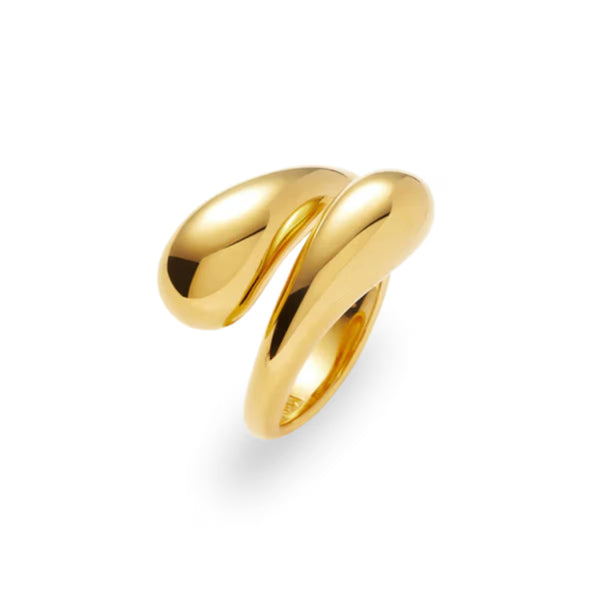
The Flow Ring
From £29.00
Named for the sensation of effortless movement, The Flow Ring has a fluid, layered profile that lends itself perfectly to the kind of absent-minded rotation many fidget ring fans describe. Its textured surface gives your thumb something to hold as you turn it, making it one of the most tactile rings in the Moonela collection.
View The Flow RingTypes of Spinner Rings Explained
Not all spinner rings work the same way or suit the same wearer. Here is a breakdown of the main styles you will encounter when shopping for a fidget spinner ring in the UK.
The most minimal form. A narrow outer band rotates around a plain inner band. These look almost identical to a standard ring when worn, making them ideal if you want the function without drawing attention to it. They tend to work best on thicker band widths where there is enough surface area for comfortable spinning.
Two separate outer elements spin independently around the inner band. These give a richer tactile experience and allow more complex decorative options, since each track can carry a different texture or metal tone. The Double Band Ring from Moonela captures this aesthetic with its layered structure.


The outer band has a raised, engraved, or patterned surface that gives the thumb additional grip during spinning. Common patterns include rope twists, hammered surfaces, chevrons, and channel-set stones. These tend to be louder to spin since the textured edge creates more contact with the inner band, but many wearers find the tactile feedback more satisfying.
Instead of a solid outer band, individual beads sit on a wire or track that circles the inner band. This is the style closest to the original Tibetan prayer wheel concept. Beaded spinners are usually quieter than textured band spinners and often feel lighter on the finger. They are particularly popular as meditation rings and worry rings in the UK wellness market.
An emerging trend that pairs a spinner band with additional stacking rings to create an entire kinetic set. This approach lets you build a wrist or finger stack where one element spins within the arrangement. For ideas on building this kind of stack, see our guide to how to stack rings.
Stack Companion
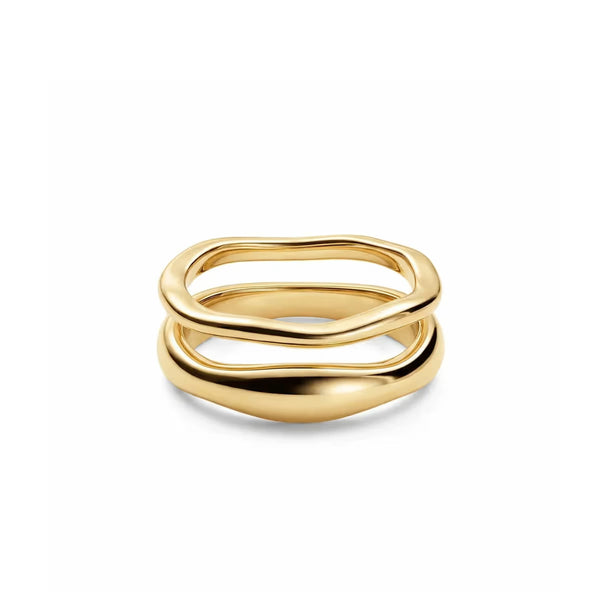
Gemini Stackable Rings
£29.99
The Gemini Stackable Rings pair beautifully alongside any motion or fidget ring. Their twin-band design echoes the layered structure of a spinner without competing with it, letting the tactile ring stay the focal point while the Gemini adds visual weight and polish to your stack.
Shop Gemini RingsMaterials Compared: Silver, Steel and Titanium
The material of a spinner ring affects everything from how it feels on your skin to how long it keeps its finish. Here is an honest comparison of the three materials you will encounter most often when shopping for a spinning ring in the UK.
| Material | Tarnish Resistance | Skin Sensitivity | Waterproof | Weight | Price Range |
|---|---|---|---|---|---|
| Sterling Silver | Tarnishes over time | Some reactions | No, avoid water | Medium | Low to mid |
| Stainless Steel (bare) | Very good | Generally safe | Yes | Heavier | Low |
| PVD Stainless Steel | Excellent | Hypoallergenic | Yes | Heavier | Mid |
| Titanium | Excellent | Hypoallergenic | Yes | Light | Mid to high |
| Gold Plated Brass | Fades with wear | Varies | Avoid water | Medium | Low to mid |
Sterling Silver
Sterling silver is the traditional choice for worry rings and meditation rings, particularly in the Tibetan and Boho-inspired styles that popularised the format. It has a warm, organic look that suits the mindfulness aesthetic well. The problem is that sterling silver tarnishes when exposed to moisture, sweat, and skin oils. Since a spinner ring is worn on the hand and touched constantly, you will need to clean it regularly to maintain its appearance. For UK wear in humid weather, this can become a chore.
Bare Stainless Steel
Steel is highly durable and almost completely immune to tarnish. Untreated surgical-grade steel (316L) is safe for most people, including those with nickel sensitivities, though individual reactions do vary. Steel is heavier than silver and titanium, which some wearers enjoy and others find uncomfortable over a long day.
Titanium
Titanium is the lightest structural metal used in jewellery and is genuinely hypoallergenic. It resists tarnish and corrosion without any additional coating. The limitation is cost and the fact that titanium is difficult to resize if your sizing changes. It is also harder to engrave or texture, so most titanium spinners have simple, clean lines.
Why PVD-Coated Steel is the Daily Wear Winner
PVD stands for Physical Vapour Deposition. It is a process where metal ions are vaporised and then deposited onto the surface of the ring under vacuum conditions, creating an extremely thin but incredibly hard layer of material. In practical terms, it means the colour and finish of the ring are bonded at a molecular level rather than simply painted or electroplated on top.
PVD coatings are typically 3 to 5 times harder than electroplating. On a ring that you touch hundreds of times a day, that difference in durability is the difference between a ring that looks good for years and one that starts flaking after a few months.


For a spinner ring specifically, PVD-coated stainless steel ticks every box that matters for daily wear:
Waterproof. You do not need to remove it before washing your hands, showering, or going swimming. This is a meaningful advantage for a ring you wear on your dominant hand and touch constantly.
PVD coatings are typically 3 to 5 times harder than electroplating. On a ring that you touch hundreds of times a day, that difference in durability is the difference between a ring that looks good for years and one that starts flaking after a few months.

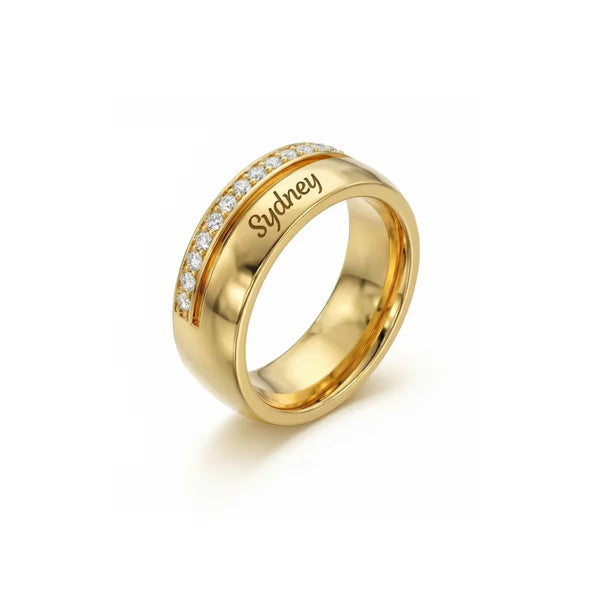
Best for Daily Wear
Double Band Ring
£41.95
The Double Band Ring features two parallel bands finished in Moonela's signature gold-tone PVD stainless steel. Waterproof, tarnish-resistant, and made for daily wear. Its layered profile invites the kind of absent-minded rotation that spinner ring fans love, and the weight sits beautifully on the finger without feeling heavy.
View the Double Band RingSizing Guide for Spinner Rings
Getting the size right for a spinner ring requires one extra consideration compared to a standard ring: the inner band needs to fit your finger, but the overall width of the ring affects how comfortable the spinning motion feels.
Measure Your Finger Correctly
Use a strip of paper or a soft tape measure. Wrap it around the base of the target finger, mark where the strip overlaps, and measure the length in millimetres. That measurement is your circumference. Divide by 3.14 to get your diameter, then match it to a standard ring size chart using UK letter sizes or US numeric sizes.
The best time to measure is at the end of the day when your fingers are at their largest. Fingers swell in warm weather and shrink in cold, so a ring that feels ideal in a heated room may feel loose on a cold morning walk. If you are between sizes, size up for comfort on the hand you intend to spin with, as a slightly looser ring is easier to spin than one that grips too tightly.
Width Matters More for Spinner Rings
A wider overall ring, typically 8mm or above, gives you more leverage when spinning the outer band with your thumb. Rings narrower than 5mm can feel fiddly to spin and may not maintain momentum as well. If you are new to spinner rings, a medium width of 6 to 8mm is a good starting point.
UK Standard Ring Sizes
| UK Size | Diameter (mm) | Circumference (mm) | US Size |
|---|---|---|---|
| J | 15.9 | 50.0 | 5 |
| L | 16.5 | 51.9 | 5.75 |
| N | 17.1 | 53.8 | 6.5 |
| P | 17.8 | 55.8 | 7.25 |
| R | 18.5 | 58.0 | 8.25 |
| T | 19.1 | 60.0 | 9 |
| V | 19.8 | 62.1 | 9.75 |
If you are unsure about sizing or buying a spinner ring as a gift, look for retailers who offer a clear exchange policy. A ring that does not fit cannot be spun comfortably, and sizing is something you really need to experience on your own hand to judge accurately.
For more advice on building a ring wardrobe that works with different finger shapes, see our guide to personalised jewellery under 50 in the UK.
Wearing Spinner Rings in a Stack
A spinner ring does not have to be a lone statement piece. Worn as part of a ring stack, it adds an interactive dimension that purely decorative rings cannot offer. The key is positioning and proportion.
Position the Spinner as the Centrepiece
Place your spinner ring on the most prominent knuckle position, typically the middle finger or index finger, where it has enough room to spin without catching on adjacent rings. Frame it with thinner, simpler bands on either side rather than competing with other wide or heavily textured rings.
Match Metals Within the Stack
A gold-tone spinner ring looks cohesive alongside other gold-tone stacking rings. Mixing metals works as a deliberate style choice, but make sure the spinner is the focal point rather than a visual conflict. A layered jewellery approach that carries the same metal tone from rings through to bracelets and necklaces tends to look more considered and intentional.
Leave Spinning Room
This is a practical consideration that is easy to overlook. If adjacent rings sit too close to the spinner, they interfere with the spinning motion. Leave at least one empty knuckle width of space on each side, or choose very slim profile bands as neighbours so they do not block the outer track.
Odd Numbers Work Best
Three or five rings in a stack feel balanced in a way that two or four do not. A spinner ring at the centre of a three-ring arrangement with one slim band on each side is one of the cleanest and most wearable configurations.

Stack Anchor
The Cascade Ring
£34.95
The Cascade Ring's layered silhouette makes it a natural centrepiece for any ring stack. Its structured, architectural look provides a strong visual anchor alongside slimmer bands, and its sculptural profile has the same eye-catching dimension that draws people to motion rings in the first place.
View The Cascade RingMoonela Rings with Spinner-Like Qualities
We want to be straightforward with you: Moonela does not currently have a dedicated spinner ring with a mechanically rotating outer band. That category is on our radar, and it is one we plan to explore as the brand develops.
What we do have is a collection of rings whose textures, layered structures, and tactile profiles appeal to the same instincts that draw people to spinner rings. Many of our customers tell us they naturally rotate their Moonela rings throughout the day, and the PVD stainless steel finish means that constant handling does not damage the surface.
If you are drawn to the idea of a motion ring UK because of the texture and tactile quality rather than specifically the spinning mechanism, the rings below are worth a close look. They offer the aesthetic of a high-end spinner alongside materials that genuinely hold up to daily wear.

Tactile Favourite
Triple Row Polished Ring
£34.95
Three rows of alternating polished and iced texture give this ring a surface that your thumb keeps returning to. The contrast between the smooth and textured sections creates exactly the kind of tactile variation that makes fidget rings so compelling. It is the closest thing in the Moonela collection to a dedicated worry ring, and customers consistently rate it as one of the most satisfying to wear throughout a busy day.
Shop the Triple Row RingCare and Maintenance Tips
The right care routine depends entirely on the material of your spinner ring. Here is a straightforward guide for each main type.
Sterling Silver Spinner Rings
Silver tarnishes when it reacts with sulphur compounds in the air and in sweat. Remove your silver spinner ring before showering, swimming, or applying lotions and perfumes. When tarnish appears, use a soft polishing cloth designed for silver, working gently to avoid scratching the outer spinning element. Store in an airtight zip bag when not wearing to slow tarnishing significantly.
PVD Stainless Steel Rings
Rinse occasionally with warm water and a tiny amount of mild soap, then dry thoroughly with a soft cloth. The PVD coating is highly scratch resistant but can be dulled by abrasive cleaning products, so avoid anything with particles or harsh chemicals. Because it is waterproof, you do not need to remove it before water exposure, which makes it genuinely low maintenance for daily wear.
Keeping the Spinner Mechanism Smooth
Over time, dust, lint, and skin particles can accumulate in the groove between the inner and outer bands. A blast of compressed air, or a soft brush with a tiny amount of water, clears this well. Avoid applying oils or lubricants to spinner rings with gemstones or porous materials in the outer band, as these can discolour settings or affect stone adhesives.
When to Remove Your Ring
Even with durable materials, removing any ring during heavy manual work, rock climbing, or contact sports is advisable. The stress on the spinning mechanism from hard impacts can misalign the outer track and permanently affect the quality of the spin. A few seconds to take it off before a workout protects a ring you have worn and enjoyed for years.
For broader advice on keeping your jewellery in top condition, our guide to ring trends and care in 2026 covers the durability considerations that matter most for everyday ring wearers.
The best spinner ring is one you forget you are wearing until you notice your thumb has been turning it for the last twenty minutes. That combination of invisibility and function is what makes the format so enduring.
Frequently Asked Questions
What is a spinner ring and how does it work?
A spinner ring, also called a motion ring, meditation ring, or worry ring, has an outer band or track that rotates freely around a fixed inner band. You wear the inner band on your finger like any ring, and the outer element spins when you touch and turn it with a thumb or adjacent finger. The spinning motion provides subtle sensory feedback that many people find calming or focusing during stressful moments.
Do spinner rings actually help with anxiety?
There is anecdotal evidence from many wearers that repetitive, rhythmic movement helps reduce feelings of anxiety and restlessness, and some behavioural research supports the idea that tactile self-stimulation can lower stress responses. Spinner rings are not a medical treatment, but for people who already fidget with their hands, channelling that into a deliberate motion with a ring can feel genuinely useful. Whether it helps you specifically is something only wearing one can tell you.
What is the best material for a spinner ring in the UK?
For daily wear in the UK, PVD-coated stainless steel offers the best combination of durability, tarnish resistance, and waterproofing. Sterling silver looks beautiful but tarnishes with regular wear and needs more maintenance. Titanium is hypoallergenic and lightweight but more expensive. If you are buying your first spinner ring and want something that will hold up without much care, PVD stainless steel is the practical choice.
Can I wear a spinner ring every day?
Yes, provided it is made from an appropriate material. PVD stainless steel, titanium, and solid gold spinner rings are all suitable for daily wear. Sterling silver spinner rings can be worn daily but will require regular polishing to maintain their appearance. Gold-plated or brass-based rings with thin coatings will show wear relatively quickly under the constant handling that spinner rings receive.
How do I know if a spinner ring fits correctly?
The inner band should slide over your knuckle with light resistance and sit snugly at the base of your finger without cutting in. If you have to wrestle it over the knuckle, size up. The outer spinning element should rotate smoothly once the ring is seated. A correctly fitting spinner ring should not require you to hold it in place as you spin; the inner band stays put while only the outer track moves.
Are spinner rings the same as fidget rings?
The terms are used interchangeably in most contexts. Both refer to rings designed for tactile interaction while wearing. The term fidget ring became more common after the fidget spinner trend of the mid 2010s, while spinner ring and worry ring have older roots in the meditation jewellery tradition. Meditation ring tends to be used for more spiritual or artisanal versions, while fidget spinner ring often refers to more engineered, precision-spin designs. Functionally they all work on the same rotating-band principle.
Find Your Perfect Motion Ring
Moonela's rings are built for the way real people wear jewellery. Every piece uses PVD stainless steel finished to look like gold, crafted to handle daily life without losing its shine. Explore the full collection below.
Shop All Moonela Rings