Comment Layer Bijoux: The Complete Guide

Comment Layer
Bijoux
Colliers, bracelets, bagues. The art of building a layered stack that looks polished, personal, and entirely you.
Pourquoi Layered Bijoux
Looks So Good
A single collier sits there. Beautiful, sure. But layered bijoux tells a story. It creates depth, draws the eye down the neckline, and turns three simple pieces into something that feels curated.
Layebague bijoux is one of those styling techniques that sounds complicated but actually follows a few simple patterns. Once you see the logic, you cannot un-see it. Every well-dressed person you admire on the street, in a magazine, at a wedding, they are using the same handful of principles. And the beautiful thing is that a layered stack is completely personal. Nobody else will combine the same collier lengths, chain textures, and pendants in the same way you do.
The reason layebague looks so effortlessly polished is visual rhythm. Your eye moves from one piece to the next, following the vertical line of a collier stack or the horizontal spread of a bracelet stack. That movement creates interest. A single chain gives you one thing to look at. Three chains give you a composition.
There is also something deeply personal about it. A name necklace layered with a birthstone pendant and a plain chain is not just bijoux. It is a reflection of people and moments that matter to you. That is why the most compelling stacks are rarely bought all at once. They are built over time, piece by piece, each one chosen with intention.
And here is a practical truth that often gets overlooked: layered bijoux works harder for your wardrobe. A well-built stack bridges the gap between casual and dressed up. You can wear two of the three pieces on a Monday morning, then add the third for dinner. The same bijoux, two different looks.

Each piece sits at a different height, and that spacing is what makes the whole thing sing
When every collier has room to breathe, the eye travels naturally from one to the next. That rhythm, short chain to long pendant, is what turns a handful of pieces into a look that feels deliberate and refined.
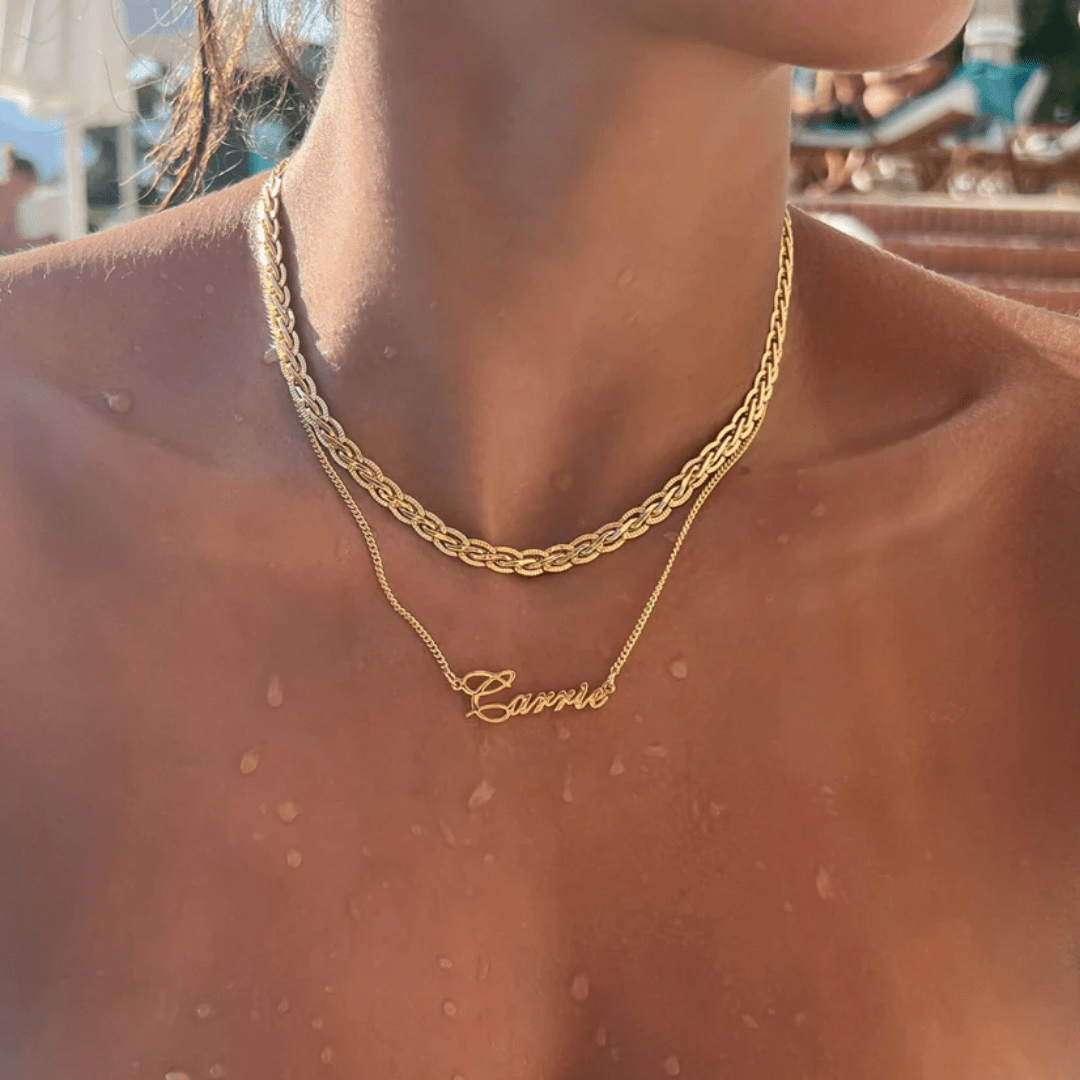
A name collier at the collarbone, a tennis chain framing it above, a gemstone pendant resting below. Three layers, three stories, one cohesive stack.
The Three Non-Negotiable
Rules of Layering
Forget everything you have heard about bijoux rules being outdated. These three principles are genuinely universal, and ignobague them is the difference between a curated stack and a tangled mess.
This is the single most important rule. Every collier in your stack needs to sit at a clearly different height on your chest. If two chains are resting at the same level, they will tangle, overlap, and fight for attention. You want a staircase effect: each piece on its own visible step.
The minimum gap between layers is about two inches (roughly 5 cm). More space works fine, especially for a relaxed, bohemian feel. Less than two inches and you are asking for chains to cling together.


Three identical cable chains at different lengths is technically layering, but it falls flat. The real magic comes from contrast. A smooth snake chain next to a sparkling tennis necklace. A flat herringbone next to a textured curb chain. A delicate pendant dangling beside a chunky link.
Texture contrast creates visual depth. It gives the eye different things to focus on and stops the stack from looking like you accidentally put on three of the same necklace. Think of it as composing a song: you need different instruments, not three guitars playing the same note.
Every stack needs a star. This is the piece your eye goes to first, the one with the most visual weight or personal meaning. It might be a Custom Tennis Name Necklace that sparkles. It might be a birthstone pendant with significance. It might simply be the longest or most colourful piece.
Once you have your hero, everything else in the stack plays a supporting role. The other chains frame it, lead the eye toward it, and let it shine. If every piece is competing to be the centrepiece, the whole composition collapses.
Collier Lengths
Explained
Understanding where each length sits on your body is the single most practical thing you can learn about layering. This table breaks down the five standard lengths and how each one functions within a stack.
| Length | Position | Role in a Stack |
|---|---|---|
| 14-15 in / 35-38 cm | Sits high on the neck, just above the collarbone | The choker layer. Opens the stack, frames everything below it. Meilleur with V-necks and open necklines. |
| 16 in / 40 cm | Rests right at the collarbone | The classic position. Ideal for name colliers and personalised pendants. The most flattebague starting point for most people. |
| 18 in / 45 cm | Falls just below the collarbone | The workhorse length. Pairs with almost every neckline and works as a middle layer between shorter and longer pieces. |
| 20 in / 50 cm | Sits on the upper chest | The lower layer. Carries heavier pendants and gemstones well. Creates a long, elegant vertical line. |
| 22-24 in / 55-60 cm | Falls to mid chest | The statement drop. Elongates the silhouette dramatically. Works best layered over high necklines and knitwear. |
The classic three-layer formula is 16, 18, and 20 inches. That gives you a clean two-inch gap between each layer, enough space for every piece to read on its own without the stack looking sparse. It is the combination that works for the widest range of body types and necklines.
If you prefer a tighter, more concentrated look (sometimes called a "neckmess" in styling circles), you can close the gaps to one inch. But this only works when your chains have noticeably different weights and textures. Two thin chains one inch apart will knot together within minutes.
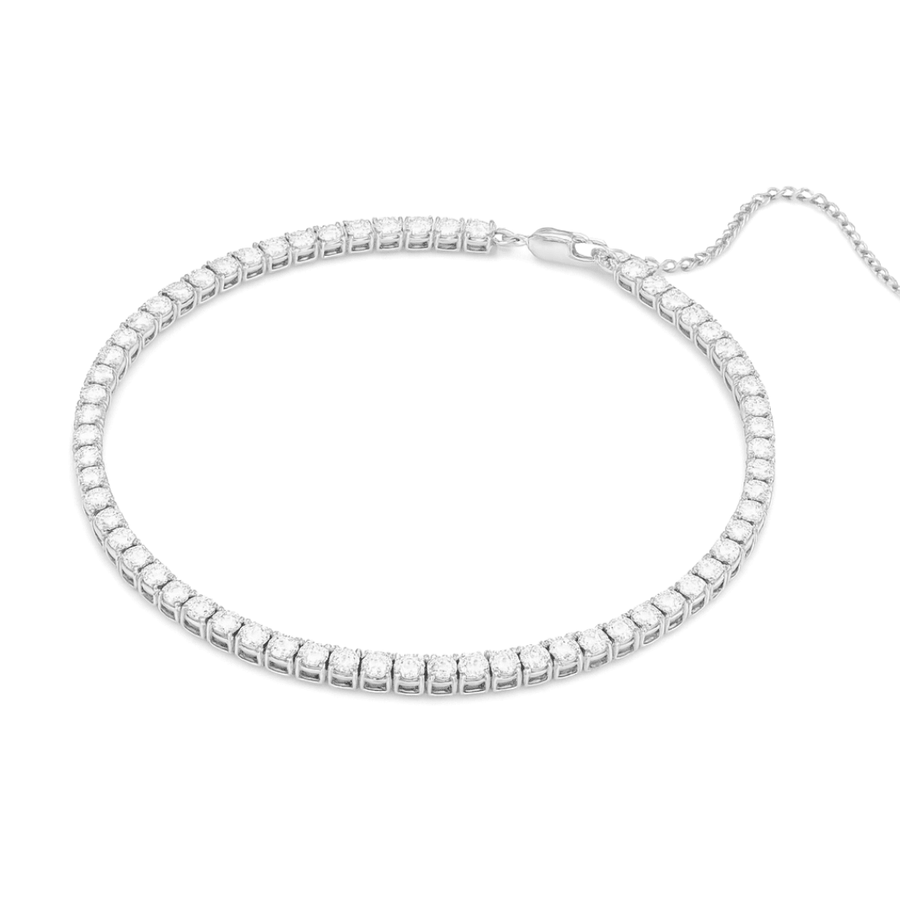
A tennis collier adds brilliance that lifts every other chain in the stack
Full zirconia stones set in 18k gold PVD coating. The sparkle creates a luminous backdrop that makes surrounding chains pop. Sits beautifully at 14 inches as the upper frame, or at 16 inches as the centrepiece.
Imperméable. Tarnish-proof. The kind of sparkle that stays brilliant through douches, workouts, and everything in between.
Shop Tennis Necklace


Building Your Necklace
Stack from Scratch
Start with one piece you already love. Something you reach for without thinking. That is your anchor, and every other chain gets built around it.
Most people already own a collier that feels like "theirs." A name collier with a child's name on it. A pendant from a birthday. A simple chain they wear daily. That piece goes on first, at whatever length it naturally falls. For most women, this anchor sits between 16 and 18 inches.


If you are starting completely fresh, a personalised piece like the Ella Name Necklace makes an excellent anchor because the personalisation gives it inherent meaning. It will always be the piece your eye goes to first.
Frame the anchor by introducing something at 14 to 15 inches. A simple snake chain, a delicate tennis necklace, or an Angel Number Choker all work well in this position. The purpose of this upper layer is to open the visual space between your neckline and collarbone. It creates a canvas for the pieces below.
The most beautiful stacks are never bought as a set. They are collected one piece at a time, each chosen because it adds something the others cannot.

Mixing Textures
and Metals
Texture contrast is the difference between a stack that looks flat and one that looks professionally styled. Different chain types catch light in different ways, move differently against your skin, and create visual layers beyond just height variation.
Snake chain + cable chain. The snake lies flat against your skin, catching light in a smooth, liquid ribbon. A cable chain beside it adds subtle dimension with its linked structure. The contrast in surface texture gives both chains their own identity, even when they sit just two inches apart.


Tennis collier + name necklace. Sparkle next to personalisation. The zirconia stones in a tennis chain create a brilliant frame for a name piece, and the combination of light and meaning gives the stack emotional depth alongside visual punch. This is one of the most popular layebague pairs, and for good reason.
Curb chain + fine pendant. A bold Initial Curb Chain Necklace at choker length paired with a delicate pendant at 18 inches creates high-low contrast that works for streetwear and smart casual. The chunky links ground the stack, while the fine pendant adds elegance.
Smooth chain + gemstone. A plain chain provides structure and lets a coloured stone do the talking. Moonstone, rose quartz, or your personalised birthstone becomes the focal point without any visual clutter around it.
Mixing gold and silver used to feel risky. Now, it is one of the most current moves in bijoux styling. The key is proportion. Choose one dominant metal (roughly 70 per cent of the stack) and introduce the other as an accent.
To make it look intentional, repeat the accent metal somewhere else on your body. If you have added a silver chain to a gold collier stack, wear a silver bague or silver bracelet too. That repetition ties the entire look together and signals that the mix was a deliberate choice, not a mistake.
When mixing metals within a collier stack specifically, keep the chain weights consistent across both tones. A gold name collier layered with a silver tennis chain works because the chains have similar visual weight. A thick gold rope chain next to a whisper-thin silver thread would feel unbalanced.


The Snake Smooth Necklace: flat, liquid, and built for layering
A flat snake chain will never tangle with a link chain because the two textures move in completely different ways. That is what makes it one of the most versatile layebague pieces you can own. It fills its layer cleanly and catches light like no other chain type.
Sits flush against the skin. No bulk, no catching on fabrics. Pure, smooth gold that frames whatever sits above or below it.
Shop Snake Necklace


Layering
for Every Occasion
The same core principles apply no matter where you are headed. Que changes is how many pieces you wear, how bold you go, and which chains you choose to highlight.
| Occasion | Layers | Approach |
|---|---|---|
| Everyday / minimal | 2-3 pieces | A name collier at 16 in, a fine chain at 18 in. One metal colour. Put it on Monday and forget about it. This is where imperméable pieces earn their keep. |
| Work / smart casual | 2 pieces | Flat-lying chains that do not swing or jingle. A Black Enamel Clover Necklace at collarbone length with a sleek chain slightly longer. Add a single bracelet and stop there. |
| Evening / events | 3-4 pieces | Mixed textures, a sparkling hero piece. Tennis collier as the centrepiece, snake chain shorter, pendant longer. Add a bracelet stack and stacked bagues. More is more, but every piece still needs breathing room. |
| Summer / holidays | 2-3 pieces | Open necklines and bare skin mean shorter stacks. Choker plus collarbone length. On your ankle, a Birth Year Anklet with sandals. Sun cream and salt water will destroy plated brass in days, but PVD steel handles all of it. |
| Weddings / formal | 2-3 pieces | Elegant and restrained. A tennis collier at the collarbone paired with one longer pendant. Match the metal to your dress hardware. Our bridesmaid bijoux guide covers coordinating pieces for the whole wedding party. |
The golden thread running through every occasion is the same: give each piece its own space, mix your textures, and let one piece take the lead. The only thing that changes is volume.
Stacking Bracelets
and Bagues
Layebague does not stop at your collarbone. Your wrists and fingers follow the same principles: vary textures, pick a hero, leave breathing room.
Bracelet stacking
The formula that works most reliably is one personalised piece, one plain chain, and one slightly chunkier bracelet. Stack them all on the same wrist for a concentrated impact, or split between both wrists for balance.
The personalised piece, whether it is an engraved cuff, an initial bracelet, or a custom bracelet, gives the stack its emotional anchor. The plain chain adds structure, and the chunkier piece provides visual weight. Three different textures, one cohesive wrist.
Pay attention to proportion across your body. If your bracelet stack is heavy and layered, keep your collier stack lighter. If your colliers are doing the talking, keep your wrists quiet with a single piece. The goal is one focal area at a time, not bijoux competing from every direction.
Bague stacking
The biggest mistake with bague stacking is covebague every finger. Leave at least one or two fingers bare so the eye has somewhere to rest. The negative space is just as important as the bijoux itself.
Combine a couple of delicate bands with one statement bague that carries visual weight: a gemstone, a textured surface, or a wider band. The Adjustable Rose Quartz Ring works beautifully as a centrepiece because the stone is a natural focal point. Place it on a central finger and flank it with thinner bands on either side.
For a deep dive into finger placement, metal mixing, and proportion on smaller hands, our complete bague stacking guide covers the full picture.

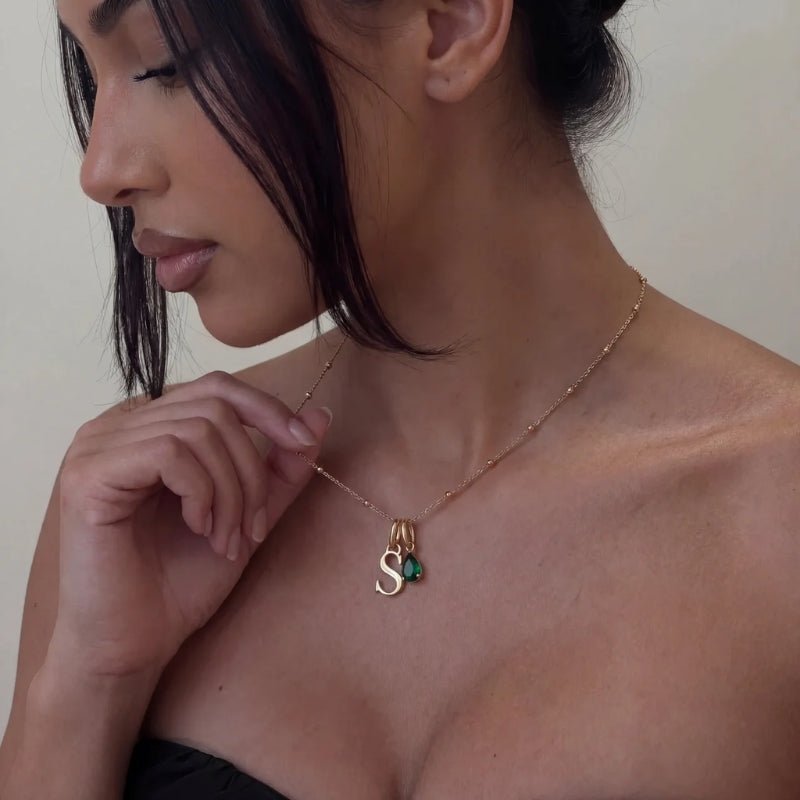
A personalised initial becomes the natural centrepiece of any layered stack
The Initial Letter Collier draws the eye immediately because the letter creates a focal point. Layer it with a tennis chain above and a pendant below, and the personalisation sits right at the heart of your composition.
Available in every letter. 18k gold PVD over acier inoxydable. Imperméable, hypoallergénique, and delivered in a premium gift box.
Shop Initial Necklace


Comment Keep Everything
Tangle-Free
Tangling is the number one fear people have about weabague multiple colliers. It is a fair concern, but it is entirely preventable with the right approach.
Use different chain weights
A heavy chain and a light chain naturally separate because gravity acts on them differently. Two chains of identical weight and thickness will wrap around each other the moment you move. Always make sure your layered pieces have noticeably different weights.
Vary the chain types
A flat snake chain will not tangle with a link chain because they have completely different textures and movement patterns. Two identical cable chains, on the other hand, will grip each other like magnets. Smooth surfaces slide past each other. Textured surfaces catch. Plan accordingly.
Put the lightest chain on first
Work from lightest to heaviest. The lightest chain sits closest to your skin, the heaviest hangs farthest out. This layebague order creates natural separation through weight distribution. The heavier chain swings with more momentum, keeping it away from the lighter ones.
Use a layebague clasp
A small connector clip at the back of your neck holds all your chains at fixed distances, physically preventing them from crossing. You can also connect the clasp of one collier to the jump bague of the next, creating a linked unit that moves together. This is the most reliable anti-tangle method available.
Store them properly
Half of all tangling happens not while weabague your bijoux but while it sits in storage. Hang chains on a collier stand or store each one individually in its own pouch. Never, ever toss multiple colliers into a box together. A minute of care when you take them off saves ten minutes of untangling later.
Starter Combinations
That Work
If you are new to layebague and want a proven combination to build from, here are three stacks composed from real pieces that complement each other.
The chaque jour duo (2 pieces)
The Ella Name Necklace at 16 inches, personalised with your name or the name of someone you love, paired with the Tennis Collier at 14 inches. The tennis sits slightly higher, adding sparkle and framing the name collier below it. Two pieces, no fuss, maximum impact. This is the stack you put on in the morning and forget about until bedtime.
The textured trio (3 pieces)
The Initial Curb Chain Necklace at choker length for boldness. The Snake Smooth Necklace at 16 inches for that flat, liquid texture. The Elegant Moon Necklace at 18 to 20 inches as the pendant drop. Three chain types, three lengths, one cohesive stack. Each piece contributes something the others do not: weight, texture, and a meaningful pendant.
The full evening stack (4 pieces)
For events, dinners, and nights out. An Angel Number Choker at the base. The Custom Tennis Name Collier at 16 inches as the hero. A snake chain at 18 inches for texture contrast. A longer gemstone pendant at 20 inches for the drop. Four layers, each with a two-inch gap, each serving a different visual purpose. Pair it with a bracelet stack and stacked bagues for the complete effect.
Layered bijoux is not about weabague more. It is about weabague pieces that belong together, each one earning its place in the stack.
Frequently Asked Questions
Comment many colliers should I layer at once?
Two to four is the sweet spot. Two creates a clean, elegant paibague that works for chaque jour wear. Three gives you the classic staircase effect. Four is bold and suits evenings and events. You can layer more than four, but each additional piece needs to earn its place. If a collier does not add a new texture, length, or focal point, it is cluttebague the stack rather than enhancing it.
Can I mix gold and silver in the same stack?
Yes, and it is one of the most current styling moves in 2026. The key is proportion: let one metal dominate (about 70 per cent) and use the other as an accent. Then repeat the accent metal elsewhere on your body, a silver bague if you have added a silver collier to a gold stack, for instance. That repetition signals intention and ties the mixed metals together.
Comment do I stop layered colliers from tangling?
Three tactics work together: use chains of different weights and textures so they separate naturally, put the lightest chain on first, and consider a layebague clasp at the back of your neck to hold everything at fixed distances. For storage, hang your colliers individually or keep each one in its own pouch. The worst combination for tangling is two identical thin chains at similar lengths.
Qu'est-ce que le meilleur collier length to start with?
16 inches. It rests at the collarbone, flatters nearly every neckline, and serves as the ideal anchor for building upward (with a 14-inch choker) or downward (with an 18-inch chain). A 16-inch name collier paired with an 18-inch plain chain is the simplest, most effective two-piece stack you can start with.
Does layebague work with personalised name colliers?
Beautifully. A name collier is one of the strongest focal pieces you can choose because the personalisation naturally draws the eye. Place it at 16 inches as your anchor, then layer plain chains and gemstone pendants around it. The name sits at the heart of the stack, and every other piece supports it.
Can I wear layered bijoux to work?
Absolutely. Keep it to two pieces that lie flat against your skin and do not swing or make noise. A name collier and a subtle chain are professional enough for any office. Avoid pieces that jingle when you move or pendants that catch on your collar. Flat chains like snake and herringbone are ideal for workwear layering.
Start Layering
Every piece is imperméable, personalised, and backed by a lifetime colour warranty. Livraison disponible en Europe in a premium gift box.
Shop Layebague ColliersNot sure which pieces go together? Send a message and the team will help you build a stack.