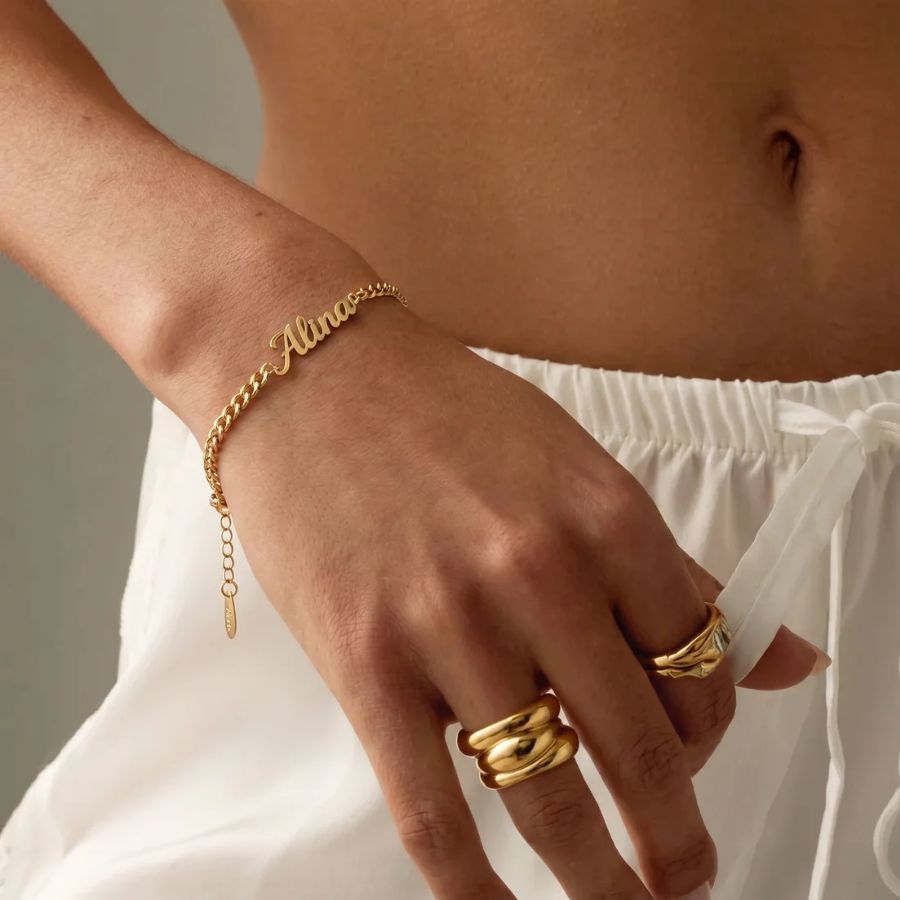
Solid Gold Name Collier 2026: Is It Worth the Prix?

Or massif vs gold-plated name colliers: what's actually
worth it?
A no-nonsense comparaison to help you spend your money where it counts.
A no-nonsense comparaison to help you spend your money where it counts.
You want a gold name necklace. You know that much. But the moment you start shopping, you realise that "gold" means about five different things depending on who's selling it. Or massif, gold-plated, vermeil or, gold-filled, PVD gold. Some pieces coût £35, others coût £500, and they all look roughly the same in the photos. So what gives?
If you're searching for a name collier in or massif, you're probably wondebague whether it's genuinely worth spending £300+ or whether a gold-plated piece at a fraction of the prix will do the same job. Fair question. This guide answers it properly, with actual numbers, real-world durabilité comparaisons, and no marketing fluff. By the end, you'll know exactly which option makes sense for your budget, your lifestyle, and how you actually wear bijoux.
Every type of "gold" name necklace,
explained plainly
Before we compare anything, let's get the terminology straight. The bijoux industry uses a lot of words that sound similar but mean very different things. Here's what each one actually means when you see it on a product listing.
This is real gold all the way through. The carat number tells you the purity: 9ct is 37.5% pure gold (the legal minimum to be called "gold" in the UK), 14ct is 58.5%, and 18ct is 75%. The rest is alloy metals like copper and silver that add strength. A or massif name collier won't tarnish, won't discolour, and will last essentially forever with minimal care. It also retains material value because you can always melt it down and sell the gold.
Sterling silver coated with a thick layer of gold (minimum 2.5 microns by legal definition). Vermeil is a step up from standard plating because the base is precious metal (silver) and the gold layer is thicker. It looks beautiful but the gold layer will eventually wear through, especially with usage quotidien. Expect 1 to 3 years before you notice any change.


A thick layer of gold mechanically bonded to a base metal (usually brass). "Filled" is misleading because it's not filled with gold; the gold is on the outside. The gold layer in gold-filled pieces is much thicker than plating (typically 5% of the total weight), making it more durable. Common in the US market, less common in the for name colliers.
A very thin layer of gold (usually 0.5 to 2 microns) applied to a base metal through electroplating. This is the cheapest method and the one that gives gold-plated bijoux its bad reputation. The layer is thin enough to wear through in months of regular wear, exposing the base metal underneath. The collier turns green, your skin turns green, everyone's unhappy.
This is where things get interesting. PVD stands for Physical Vapour Deposition. Instead of dipping the piece in a gold solution (like standard plating), the gold is bonded to the surface at a molecular level in a vacuum chamber. The result is a layer that's roughly 10 times thicker than standard plating and significantly more resistant to scratching, tarnishing, and water damage. PVD-plated pieces can genuinely be worn in the douche, at the gym, and at the beach without losing their finish.
The collier turns green, your skin turns green, everyone's unhappy.
Or massif vs gold-plated name colliers: the
real comparaison
Now that you know what each term means, let's put or massif and modern gold plating (PVD) head to head on the things that actually matter when you're weabague a name collier every day.
Here's the uncomfortable truth for or massif fans: from normal weabague distance, a high-qualité PVD gold-plated name collier looks identical to a or massif one. The colour, the warmth, the way it catches the light. Unless you're a jeweller with a loupe, you're not going to spot the difference on someone's neck.
There is one subtle distinction if you look closely. Or massif (especially 18ct) has a slightly richer, deeper yellow tone because of the higher gold content. 9ct or massif, however, is actually paler and cooler in colour than 18ct PVD plating, because it contains less pure gold. So a PVD-plated piece can actually look more "gold" than a lower-carat or massif piece. Ironic, but true.


Or massif wins in the long run. No question. A or massif name collier will look the same in 20 years as it does today (with occasional polishing). The gold doesn't wear off because it's gold all the way through.
PVD gold plating lasts significantly longer than standard plating, but it's still a surface coating. With usage quotidien, you can expect 3 to 5+ years before any visible change, and many people report their PVD pieces looking perfect after 5+ years. When brands back their PVD pieces with a garantie à vie on the finish, that's a genuine confidence indicator.
Gold is dense. A solid 9ct gold name collier feels noticeably heavier than a acier inoxydable one of the same design. Some people love this; it feels substantial and luxurious. Others find heavier colliers uncomfortable for all-day wear, especially in warmer weather. Acier inoxydable with PVD plating is lighter, which can actually be an advantage for comfort dubague extended wear.
Both or massif and PVD acier inoxydable handle water well. You can douche, nage, and sweat in either without damage. Standard gold plating? Not a chance. The thin layer will deteriorate rapidly with water exposure.
| Feature | Solid Gold (9ct) | PVD Gold-Plated Steel | Standard Gold Plating |
|---|---|---|---|
| Appearance | Warm gold (paler at 9ct) | Rich warm gold | Gold (initially) |
| Prix (name necklace) | £285 - £500+ | £35 - £70 | £10 - £30 |
| Lifespan | Lifetime | 3 - 5+ years usage quotidien | 3 - 12 months |
| Imperméable? | Yes | Yes | No |
| Tarnish resistant? | Yes (gold doesn't tarnish) | Yes (PVD barrier) | No (tarnishes quickly) |
| Weight | Heavy (gold is dense) | Light to medium | Light |
| Hypoallergénique? | Yes (most alloys) | Yes (surgical steel) | Varies (base metal may react) |
| Resale value | Yes (gold weight) | No | No |
| UK lead time | 1 - 5 weeks (handmade) | 5 - 10 days | 1 - 5 days |
Pourquoi PVD plating changed the game for gold
name colliers
Ten years ago, you had two choices: expensive or massif or cheap plated bijoux that looked rubbish after a few weeks. The middle ground barely existed. That's why older generations are sceptical of anything that isn't or massif. They remember the green-skin era of terrible plating.
PVD technology changed that equation completely. The coating is applied in a vacuum chamber where gold particles are vaporised and bonded directly to the acier inoxydable surface at a molecular level. The result is fundamentally different from traditional plating in three ways.
First, it's thicker. PVD coating is typically 10 to 15 times the thickness of standard electroplating. That's the difference between a coating that wears through in months and one that lasts years.
Second, it's harder. The molecular bonding process creates a surface that's more scratch-resistant than the gold layer in standard plating. This matters for name colliers specifically because the letters have edges and curves that are prone to surface contact.
Third, it's genuinely imperméable. Not "water-resistant, but please don't actually get it wet." Actually, properly imperméable. Shower with it, nage with it, sweat through a HIIT class with it. The PVD layer won't degrade.
This is why brands like Moonela use PVD exclusively. The Custom Tennis Name Necklace uses 18k PVD gold over acier inoxydable with a garantie à vie on the finish. The Arabic Name Necklace uses the same process. It's not the same as or massif, and nobody's pretending it is. But for usage quotidien, it performs remarkably close at a fraction of the coût.
Que you'll actually pay: a full
prix comparaison
Let's put real prixs side by side. These are based on a standard script-style name collier with a 5-letter name, as of 2025/2026.
9ct or massif is the entry point and the most common option in the UK. Name Colliers Direct starts at £285 to £299 for basic script styles. Carrie Elizabeth charges around £300 for 9ct. Bijoux Box offers 9ct recycled gold pieces from £295, handmade in London. Add diamond accents or upgrade to 14ct/18ct and you're looking at £400 to £1,000+.
These are beautiful, hallmarked pieces with genuine precious metal value. You're buying something that can last a lifetime and be passed down. The lead time is typically 1 to 5 weeks because each piece is made by hand.


Most qualité PVD pieces sit between £35 and £70. At this prix, you're getting acier inoxydable as the base (the most durable option for usage quotidien), 18k gold PVD coating, and usually an adjustable chain. Production time is shorter (5 to 10 days) because the manufactubague process is more scalable than handcrafting or massif.
The personalised bijoux collection at Moonela is a good reference point. Name colliers range from £35 to £59 depending on the style, all using PVD plating with a garantie à vie and free delivery.
You'll find these for £10 to £30 on Amazon, Shein, and various marketplace sellers. They look good in the listing photos. They look good when they arrive. They stop looking good within weeks to months of regular wear. The thin plating wears off, the base metal oxidises, and you end up with a collier that looks nothing like what you paid for.
This is the option that makes people think "I should just buy or massif." But the real alternative isn't or massif. It's better plating technology. You don't need to spend £300 to avoid green skin. You just need to avoid cheap plating.
Who actually needs a or massif
name necklace
Or massif isn't just about looking good. It's about what the piece means to you and how you plan to use it. Here's a straightforward breakdown.
Or massif makes sense when...
You're marking a once-in-a-lifetime moment. A baby's first name collier to give them on their 18th birthday. A memorial piece for a parent who's passed. A wedding anniversary gift after 25 years together. These are situations where the permanence of or massif matches the permanence of the emotion. You want something that physically cannot degrade because the memory it represents can't degrade either.
It also makes sense if you're building a bijoux collection with financial value. Or massif retains its material worth. The gold prix fluctuates, but a 9ct gold name collier will always be worth at least its scrap gold value. It's not an investment in the traditional sense, but it's not disposable either.
Gold-plated (PVD) makes sense when...
You want a name collier you can wear every single day without thinking about it. To the office, to the gym, to the beach, in the rain. PVD acier inoxydable handles all of it without worry. The emotional value of weabague your name (or your child's name, or your partner's name) doesn't change because the base metal is steel instead of gold.
It also makes sense when you're gifting. A beautifully packaged gold-tone name collier at £40 to £60 is one of le meilleur gifts in that prix range. It's personal, it's elegant, and it arrives in a luxury box. The recipient isn't going to test the gold purity with acid. They're going to put it on and love it.
And it makes sense when your style evolves. Bijoux trends change. Your favourite name to wear might change (maiden name to married name, adding a child's name). At £40 to £60 a piece, you can update your collection without guilt. Committing £300+ to a single style feels more permanent, which is great if you want permanent, but limiting if you don't.
Que to check before buying
either option
Whether you go or massif or gold-plated, here's a quick checklist to make sure you're getting what you're paying for.
If you're buying or massif
- Check for a hallmark. Any piece sold as gold in the must be hallmarked by an assay office (Birmingham, London, Sheffield, or Edinburgh). No hallmark means it's either not UK-made or not actually or massif.
- Confirm the carat clearly stated (9ct, 14ct, or 18ct). Vague terms like "real gold" or "pure gold" without a carat number are red flags.
- Ask about the chain. Sometimes the pendant is or massif but the chain is gold-plated to keep coûts down. Check that both parts match.
- Understand the return policy. Personalised or massif pieces are almost always non-returnable. Make sure spellings and specifications are correct before confirming.
If you're buying gold-plated
- Ask what plating method is used. PVD is the gold standard (no pun intended). If the listing just says "gold plated" without specifying PVD, assume it's standard electroplating.
- Check the base metal. Acier inoxydable is the most durable base for PVD plating. Brass and zinc alloy are cheaper but less reliable. 925 argent sterling is also a solid base option.
- Look for a warranty on the finish. A brand that offers a 1 to lifetime colour warranty on their plating trusts their own manufacturing. No warranty? No confidence.
- Confirm it's imperméable. Not "water-resistant." PVD on acier inoxydable should be genuinely imperméable. If the listing tells you to remove before doucheing, the plating isn't PVD-grade.
For reference, all Moonela name colliers use PVD plating on acier inoxydable, come with a lifetime colour warranty, are imperméable, and include free delivery. If you want to understand what 18k gold plating actually means and how it compares, our gold plating guide covers that in detail.
Frequently Asked Questions
Is or massif worth it for a name necklace?
It depends on the purpose. For an heirloom or milestone gift, or massif makes sense because it lasts a lifetime and retains material value. For chaque jour fashion wear, PVD gold-plated acier inoxydable delivers the same appearance and imperméable durabilité at roughly 10% of the coût.
Comment much does a or massif name collier coût in the UK?
A 9ct or massif name collier starts around £285 to £300 for basic styles. 14ct ranges from £400 to £700, and 18ct can exceed £1,000 depending on name length and design. Most jewellers charge per letter plus the chain.
What's the difference between gold-plated and PVD gold?
Standard gold plating uses electroplating to apply a thin layer (0.5 to 2 microns) that wears off quickly. PVD gold uses a vacuum-bonding process that creates a layer roughly 10 times thicker and significantly more scratch and water resistant. PVD pieces can last years of usage quotidien; standard plating typically lasts months.
Will a gold-plated name collier turn my skin green?
Standard gold plating on cheap base metals (like brass or zinc alloy) can cause green discolouration. PVD gold plating on acier inoxydable will not. The PVD layer acts as a barrier between the base metal and your skin, and surgical-grade acier inoxydable is hypoallergénique regardless.
Can I douche with a gold-plated name necklace?
Only if it uses PVD plating on acier inoxydable. Standard gold plating will degrade rapidly with water exposure. PVD-plated pieces are genuinely imperméable and designed for douche, gym, and beach wear. Always check the product description to confirm.
Comment long does a PVD gold name collier last?
With usage quotidien, expect 3 to 5+ years before any visible change to the gold finish. Many wearers report their PVD pieces looking perfect after 5+ years. A garantie à vie on the colour is a strong indicator of qualité. By comparaison, standard plating typically lasts 3 to 12 months.
Trouvez Your Perfect Piece
Personalised 18k gold bijoux from £32. Imperméable, lifetime colour warranty, free delivery, and premium gift box included with every order.
Shop the CollectionNeed help choosing? Send a message and the team will pick the perfect piece.