Tennis Bracelet vs Tennis Necklace UK 2026: Which First
Tennis jewellery owned the 2024 and 2025 trend cycle, and it is still one of the most-searched categories in UK jewellery in 2026. The question most buyers arrive at is almost always the same: tennis bracelet or tennis necklace first, and does it make sense to buy them as a set.
The honest short answer is that a tennis bracelet is the better first piece for most UK buyers. It costs less, it works in more outfits, it survives daily wear better on the wrist than the decolletage, and it is less of a statement if you are testing whether the trend suits you. Our full range of tennis jewellery is built around pairs that layer well, but the bracelet is where we tell new buyers to start. This guide explains why, shows how each piece performs, and covers when a tennis necklace is actually the smarter first buy.
What Defines a Tennis Bracelet and a Tennis Necklace
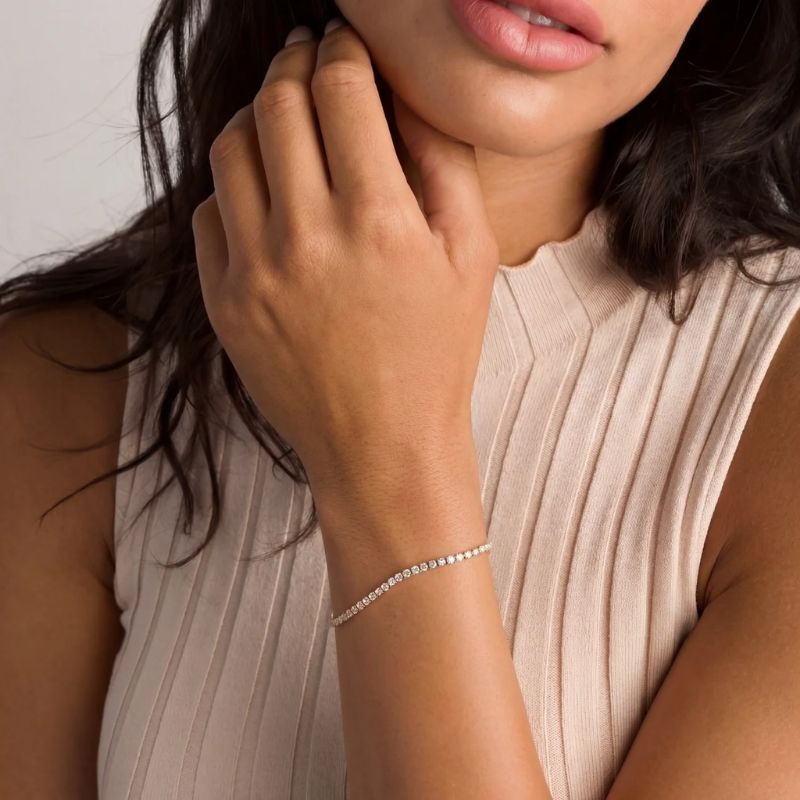
Both pieces share the same core design language. A continuous line of small, matched stones (usually cubic zirconia, moissanite or lab diamonds in modern pieces, occasionally real diamonds at the luxury end) set in a thin metal channel, one after the other, forming a flexible chain that sits close to the skin. The stones are roughly the same size along the whole length, which is what gives tennis jewellery its signature uniformity.
The name comes from the 1987 US Open, when Chris Evert lost her diamond line bracelet mid-match and had the game paused to find it.
From that moment the "tennis bracelet" became the category name for a diamond line bracelet, and by the 2020s it had been extended to necklaces, anklets, rings and earrings using the same line-of-stones construction. For the full origin story our guide on what is a tennis bracelet covers the history and buying basics in more depth.
The two pieces differ in three practical ways: how much you see them, how much they cost, and how they interact with the rest of what you are wearing.

Oval-cut tennis studs: the signature continuous stone construction adapted for earrings.
Tennis Bracelet vs Tennis Necklace: The Comparison
| Criteria | Tennis Bracelet | Tennis Necklace |
|---|---|---|
| Typical price range | £30 to £80 (CZ, PVD gold) | £50 to £120 (CZ, PVD gold) |
| Stone count | 45 to 65 stones typically | 90 to 130 stones typically |
| Length (standard UK) | 17 to 19 cm wrist | 40 to 45 cm (choker to princess) |
| Visibility in daily outfits | Frequent, casual | Depends on neckline and layering |
| Works with a watch | Yes, stacked on wrist | N/A |
| Works in a layered look | With 2 to 3 other bracelets | Anchor piece in most stacks |
| Occasion level | Everyday to evening | Leans evening/event |
| Waterproof PVD option | Yes, standard in 2026 | Yes, standard in 2026 |
| Personalisation | Add initials or name segment mid-line | Add pendant or initial segment |
| Gift-giving clarity | High, size is forgiving | High, chain adjusts easily |
Why the Tennis Bracelet Is the Better First Piece
Three reasons make the bracelet the default first tennis piece for most UK buyers.
Price and risk. A tennis bracelet in 18k PVD gold plating over stainless steel sits between £30 and £80.
The equivalent tennis necklace starts at £50 and quickly rises to £120 for the same stone quality. If this is your first experiment with the tennis trend and you are not sure how often you will wear it, the bracelet halves the risk.
Wear frequency. A bracelet on the wrist next to a watch or with one or two dainty chains is easy to style every day.
A tennis necklace sits on the décolletage, which means it works with some necklines (v-neck, scoop, square) and clashes with others (polo, high crew, button-up shirts). The bracelet goes with everything in a typical UK wardrobe.
Maintenance. The wrist is a less fragile area than the neck.
Tennis bracelets handle friction, sleeves, handbag handles and laptop edges without the stones looking stressed. Tennis necklaces sit near hair, perfume and makeup, which over time leave residue on the setting channels if the piece is not cleaned regularly.
The modern tennis bracelet is also the star of the 2026 layering look.
Stacked with a plain gold chain bracelet and a personalised name piece on a cuban chain, it carries the entire wrist stack without feeling overdressed. For more on why the trend has staying power, our piece on the tennis jewellery trend in 2026 covers the data and the style direction.

The beaded tennis bracelet sits at the entry point for first-time tennis buyers.
The Same Piece in Bracelet and Necklace Form
Looking at the same design across both formats is the clearest way to decide. These are three real examples across the Moonela range where buyers routinely cross-shop.

Aurora Crystal Tennis Bracelet
Round-cut cubic zirconia stones in a continuous 18k gold plated channel over stainless steel. PVD coating means shower, gym and sleep are all fine without removal.
This is the piece we suggest as a first tennis purchase. Everyday-wearable on its own or stacked, pairs with a watch, and the price point leaves room to add pieces to the stack later.
From £45
Shop Tennis Bracelets
Aurora Crystal Tennis Necklace
Same Aurora design, same stone cut, same PVD plating. Sits at princess length on most UK wearers, with an extender to reach choker or medium-length layering.
Best as the second tennis purchase, once you know the design pairs with your wardrobe. Layers beautifully over a plain gold chain and a personalised pendant for a three-piece neck stack.
From £68
Shop Tennis Necklaces
Mini Tennis Studs
Once the bracelet and necklace are in the box, studs or small hoops in the same stone cut complete the tennis stack without over-dressing the look.
A common buy order is bracelet first, necklace on a birthday or gift occasion six months later, and studs as the finishing piece. The three pieces together look coordinated without matching too rigidly.
From £32
Shop Tennis EarringsBuy the bracelet. Wear it every day for three months. If you still want the matching necklace at the end of that, you have your answer, and the set will feel earned rather than bought all at once.
When to Buy the Tennis Necklace First Instead
There are three specific buying contexts where skipping the bracelet and starting with a tennis necklace makes more sense.
The milestone gift. An anniversary, a landmark birthday, an engagement-adjacent celebration.
A tennis necklace at £70 to £120 photographs more clearly in a gift box than a bracelet at £45, and the symbolism of a piece worn close to the heart is stronger than one worn on the wrist. If the occasion matters more than the everyday-wear frequency, the necklace wins on impact.
Event dressing without strong jewellery in the wardrobe. Weddings, black tie, formal dinners.
A tennis necklace is the single piece that turns a plain black dress or a minimalist satin blouse into a finished look. If you already own a watch and a few bracelets but your neck stays bare for events, the necklace fills the gap more than another wrist piece would.
Personalisation that the neck carries better. A tennis necklace with an Arabic name, initial or short phrase worked into the middle section is a genuinely heirloom-feeling piece.
The same personalisation on a bracelet is lovely but lives out of sight most of the time. If the piece carries a name, it usually deserves to be seen.
For personalised tennis options specifically, Moonela's tennis range includes pieces with integrated name or initial segments, which sit elegantly in the middle of the line without breaking the uniform tennis look.
Cubic Zirconia, Moissanite or Diamond
Whether you are buying the bracelet or the necklace first, the stone decision matters more than most new buyers realise. Modern UK tennis jewellery comes in three stone tiers.
Cubic zirconia (CZ) is the standard modern tennis stone. It is clear, bright, holds colour well, and costs pennies compared to diamonds.
Most tennis pieces at £30 to £120 use CZ. The sparkle is visually indistinguishable from diamonds at arm's length and even up close in the right cut.
Moissanite sits between CZ and diamond in price and brilliance. It has slightly more rainbow fire than CZ, which is noticeable in direct sunlight. UK moissanite tennis pieces typically start at £180 for bracelets and £300 for necklaces.
Lab-grown diamond is the honest middle ground between CZ and natural diamond. Chemically identical to mined diamonds, with prices roughly one-tenth of natural.
A lab diamond tennis bracelet starts at about £400 in the UK, with solid gold settings. Our breakdown on crystal vs diamond tennis bracelets covers the practical wear differences.
For a first tennis piece at the £30 to £120 price band, CZ in 18k PVD gold over stainless is the honest recommendation.
The sparkle quality of modern CZ is excellent and the budget leaves room to buy a second piece. Save moissanite and lab diamonds for once you know the trend is in your long-term wardrobe.

Square-cut CZ studs: modern cubic zirconia at the visual quality of lab-grown diamond.
How to Size a Tennis Bracelet and Necklace Correctly
Sizing is where tennis pieces differ most from other jewellery.
Bracelet sizing. Measure your wrist at its widest point (usually just past the wrist bone). Add 1 to 2 cm for comfort.
UK standard sizes are 16 cm (XS), 17 cm (S), 18 cm (M, the most common), 19 cm (L) and 20 cm (XL). Most tennis bracelets have an extender chain of 2 to 3 cm, which means you can buy one size and adjust rather than guess exactly.
Necklace sizing. The two common UK lengths are 40 cm (choker to collar, sits at the base of the neck) and 45 cm (princess length, sits at the collarbone).
A 40 cm piece pairs well with a 50 cm pendant necklace for layering. A 45 cm piece works on its own as a standalone statement.
Gift-buying note. If you are buying as a gift and do not know the recipient's size, choose medium (18 cm bracelet, 40 cm necklace) and rely on the extender chain.
The margin of comfort is enough for most wrists and necks, and returning a tennis piece for a size swap is easier than returning it because the style was wrong.
If You Are Shopping Tennis Jewellery
A few related guides that go deeper on specific tennis jewellery questions most UK buyers run into:
- Crystal tennis bracelet UK style guide: how to style the CZ tennis bracelet across everyday, evening and formal contexts.
- The history of name necklaces: how personalised jewellery became the anchor piece that tennis pieces layer around.
- Gold vermeil vs gold plated: which plating method is right for the level of wear a tennis piece sees daily.
Final Thoughts
The honest answer on tennis jewellery order is: bracelet first, necklace second, studs third. The bracelet builds wear-confidence in the trend at the lowest price point, the necklace earns its place once you know the style suits you, and the studs complete the set without over-styling. For most UK buyers in 2026, that three-piece sequence spread over six to twelve months is the smarter buying path than a single big-spend tennis set.
Frequently Asked Questions
Should I buy a tennis bracelet or tennis necklace first?
Buy the bracelet first for most buyers. It costs less, wears more often, is easier to style across everyday outfits, and leaves budget for the matching necklace as a follow-up purchase. The necklace is the better first buy only if the purchase is a milestone gift or an event-dressing need.
Are tennis bracelets still in style in 2026?
Yes. The tennis trend arrived around 2023, peaked in 2024, and has settled into wardrobe-staple status in 2026. Search volume remains high and the look is now considered a modern classic rather than a passing trend.
Can I wear a tennis bracelet every day?
Yes, if the piece is built for daily wear. Modern 18k gold PVD plating over 316L stainless steel survives showers, gym sessions and sleep without removing the piece. Avoid concentrated chlorine (spa shocks) and ultrasonic cleaners.
What is the difference between a tennis bracelet and a tennis necklace?
Both share the same continuous-line stone design, but the necklace has roughly twice the stone count, is about half to two-thirds longer, and costs 1.5x to 2x more for equivalent stone quality. Bracelets are everyday pieces, necklaces lean toward evening and event wear.
How much does a good tennis bracelet cost in the UK?
In 2026, a high-quality tennis bracelet in CZ with 18k PVD gold over stainless costs £30 to £80. Moissanite starts around £180. Lab-grown diamond starts around £400. Natural diamond begins at £1,500 and climbs indefinitely.
Are tennis bracelets worth buying if I do not play tennis?
The name is historical, not functional. A tennis bracelet is simply a continuous line of matched stones set in a flexible chain. Most UK wearers have no connection to the sport and wear the piece as everyday jewellery.
Can tennis bracelets be personalised?
Yes. Modern independent UK brands now offer tennis bracelets with a middle section that spells out a name, an initial or a short word in cubic zirconia letters, set seamlessly between the standard stones. Personalised tennis pieces are one of the fastest-growing sub-categories in the tennis jewellery market in 2026.
Do tennis necklaces tarnish?
The waterproof PVD gold over stainless steel does not tarnish. Older silver-plated tennis necklaces can oxidise where sweat or perfume accumulates. If the piece is marketed as waterproof with a stainless base, tarnishing is not an issue under normal wear conditions.
What size tennis bracelet should I buy as a gift?
Choose medium, which is 18 cm in most UK brand sizing. The extender chain of 2 to 3 cm on most modern tennis bracelets allows the piece to fit wrists from 15 cm to 19 cm comfortably, covering the vast majority of adult UK wearers.
Can I layer a tennis necklace with other chains?
Yes, and most wearers prefer the layered look. A 40 cm tennis choker layers well with a 50 cm pendant or initial chain. Use a magnetic layering clasp to prevent tangling and allow all pieces to sit at the intended length.
Keep Reading
Tennis jewellery that lasts the trend cycle
Waterproof 18k gold plating, continuous CZ sparkle, made to wear every day.
Shop Waterproof Earrings