PVD vs Gold Plating 2026: Which Lasts Longer?

PVD Coating Gioielli:
Cosa It Is and Perché It Matters
The science behind gioielli that actually keeps its colour. No green fingers. No fading. Just gold that stays gold.
Cosa Is PVD Coating on Gioielli?
It is the single biggest upgrade in affordable gioielli technology over the last decade. And most people have never heard of it.
PVD coating gioielli uses a process called Physical Vapour Deposition to bond a thin layer of material (usually titanium nitride or zirconium nitride) directly onto a metal surface. Think of it like this: traditional gold plating sits on top of gioielli the way paint sits on a wall. PVD coating, on the other hand, becomes part of the surface itself. The atoms literally fuse with the base metal at a molecular level inside a vacuum chamber. That is why PVD coated pieces keep their colour for years, not weeks.
If you have ever bought a gorgeous gold-toned collana only to watch it turn brassy or green within a few months, you already understand the problem PVD solves. Traditional electroplating methods deposit a thin layer of gold onto a base metal using an electrical current. It looks beautiful on day one. By month three, the colour starts shifting. By month six, you are quietly moving it to the back of your gioielli box and pretending it never happened.
PVD coating changed that entire equation. The finish is harder, more resistant to scratching, and far less likely to react with your skin chemistry. It is the reason that affordable gioielli can finally compete with fine gioielli on longevity, even if the prezzo tag stays firmly in the "treat yourself on a Tuesday" range.
Come PVD Coating Actually Works
You do not need a chemistry degree to understand this, but knowing the basics helps you spot genuine PVD gioielli from pieces that just use the term as a marketing buzzword.
The Vacuum Chamber Process
PVD coating happens inside a sealed vacuum chamber at very high temperatures. Here is the simplified version of what goes on:
First, the gioielli is thoroughly cleaned and placed inside the chamber. The air is removed to create a near-perfect vacuum. Then a "target" material (the substance that will become the coating) is bombarded with high-energy ions. This causes atoms from the target to vaporise into a plasma cloud. Those atoms travel through the vacuum and bond with the surface of the gioielli at the atomic level.
The entire process takes several hours, and the coating thickness is measured in microns. For gioielli, PVD coatings are typically between 0.5 and 5 microns thick. That sounds tiny, but the density and hardness of the coating make it remarkably durable. A 2-micron PVD coating will outlast a 5-micron traditional gold plating by a significant margin.
Types of PVD Coatings Used in Gioielli
Not all PVD coatings are identical. The most common types you will see in gioielli are:
Titanium Nitride (TiN) produces that warm, rich gold tone that most people associate with PVD gioielli. It is the most widely used coating for gold-coloured pieces and offers excellent scratch resistance.
Zirconium Nitride (ZrN) gives a slightly lighter, more yellow-gold appearance. Some brands prefer this for pieces that need to closely match the look of solid 18k or 24k gold.
Chromium Nitride (CrN) is used for silver and gunmetal finishes. If you see PVD gioielli in colours beyond gold, this is usually the coating at work.

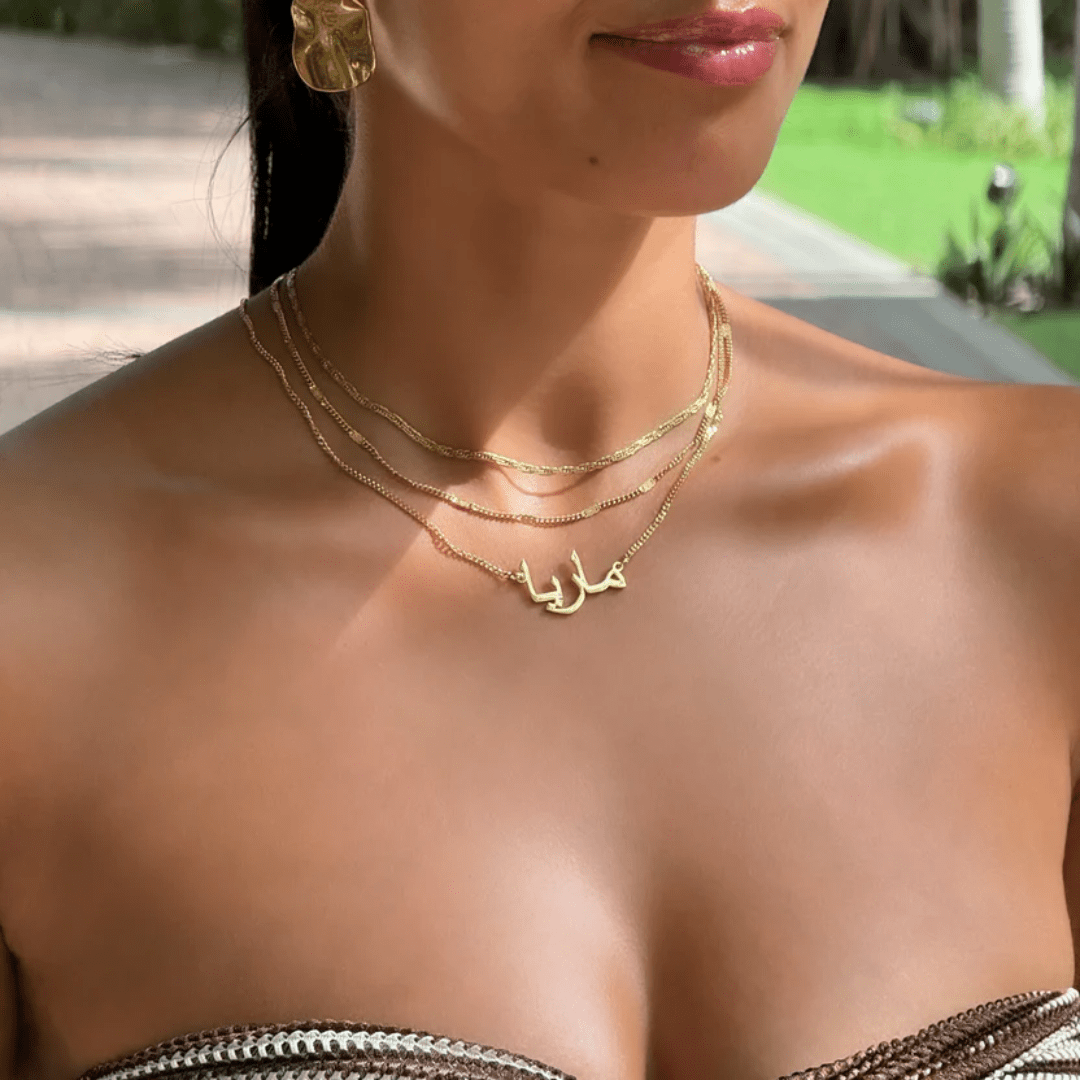
Astrid Name Necklace
A personalised name collana finished with PVD coating over surgical-grade acciaio inossidabile. The kind of piece that keeps its warmth whether you wear it daily or save it for weekends. See our full name collana guida for styling ideas.
Impermeabile. Anallergico. Built to be worn, not babied.
From £58.95
View Necklace


PVD Coating vs Gold Plating
This is the question everyone asks, and it deserves a proper answer. The two finishes might look similar in a product photo, but they could not be more different in practice. If you want the deep dive, we have a dedicated article on PVD vs gold plated gioielli that covers every angle.
| Feature | PVD Coating | Traditional Gold Plating |
|---|---|---|
| Process | Vacuum deposition at molecular level | Electrochemical bath |
| Hardness | ~2,400 Vickers (TiN) | ~120 to 180 Vickers |
| Typical Thickness | 0.5 to 5 microns | 0.5 to 5 microns |
| Lifespan | 3 to 10+ years with care | 6 months to 2 years |
| Scratch Resistance | Excellent | Poor to moderate |
| Tarnish Resistance | Very high | Low to moderate |
| Water Resistance | Fully impermeabile | Water accelerates wear |
| Skin Reactions | Anallergico | Can cause reactions as plating wears |
| Environmental Impact | No harsh chemicals used | Uses cyanide-based solutions |
| Prezzo Range | Slightly higher | Lower upfront costo |
The thickness numbers might look the same, but that is misleading. Think of it this way: PVD at 2 microns is like a ceramic tile on your floor. Traditional plating at 2 microns is like a coat of nail polish. Same thickness, completely different durabilità.
The real costo confronto is not about the prezzo tag. It is about costo per wear. A PVD coated collana at £35 that lasts five years works out to about 2p per wear if you put it on every day. A gold plated collana at £15 that lasts eight months costos about 6p per wear. PVD is genuinely the cheaper option once you factor in time.
The best gioielli is not the most expensive. It is the piece you reach for every single morning without thinking twice.
There is another angle worth mentioning: 18k gold plated gioielli has improved in recent years, and qualità pieces can absolutely last well if you treat them carefully. The difference is that PVD does not ask you to be careful. You can doccia in it, nuoto in it, sonno in it, and spray perfume while weaanello it. Try that with traditional plating and you will be shopping for a replacement within weeks.

Eterna Roma
A chunky chain bracciale with a PVD gold finish that does not quit. Stack it with thinner bangles or let it carry the whole look on its own. Perfect for the "throw it on and go" approach to getting dressed.
Acciaio inossidabile core. PVD finish. Zero maintenance required.
From £24.95
View Bracelet


Benefits of PVD Coated Gioielli
We have touched on some of these already, but let us lay out the full picture. Because PVD coating is not just "better plating." It is a fundamentally different approach to making affordable gioielli actually last.
This is the one that gets people's attention first, and rightly so. PVD coated gioielli is fully impermeabile. Not "water resistant" with a list of caveats. Actually impermeabile. You can doccia with it, nuoto with it, wash your hands without taking it off, and get caught in the rain without a second thought. The coating does not degrade in water because the bonding process creates a surface that water simply cannot penetrate.
If you have been searching for impermeabile earanelli, PVD coated options are the real deal. Same goes for collane, anelli, and bracciali. For more on whether you need to remove gioielli before docciaing, we have a full guida on showeanello with gold plated gioielli.


Tarnishing happens when metal reacts with oxygen, moisture, or chemicals in the air and on your skin. Traditional plating is vulnerable to all three. PVD coating resists all three. The molecular bond between the coating and the base metal creates a barrier that oxidation cannot easily break through.
If you have struggled with tarnished gioielli before, you will want to read our guida to earanelli that do not tarnish. PVD is one of the most reliable ways to avoid the problem entirely.
Remember those Vickers hardness numbers from earlier? That is not marketing fluff. PVD coatings are used in industrial cutting tools, aerospace components, and surgical instruments. When the same technology is applied to gioielli, you get a surface that shrugs off the kind of uso quotidiano that would leave traditional plating looking tired within months.
This does not mean PVD is indestructible. Deep scratches from sharp objects can still damage the surface. But the ogni giorno bumps, rubs, and contact with fabrics, bags, and other gioielli? PVD handles them without flinching.
One of the most underrated benefits. PVD coating creates a complete seal over the base metal, which means even if the underlying material contains nickel or other common allergens, those metals cannot make contact with your skin. This is particularly important for earanelli, where the metal sits directly in a piercing.
For anyone with sensitive skin, PVD coated acciaio inossidabile is one of the safest options available outside of oro massiccio or platinum.
Traditional gold plating relies on electrochemical baths that use some genuinely nasty chemicals, including cyanide-based solutions. PVD coating uses a physical process inside a vacuum chamber with no harmful chemicals involved. The waste products are minimal, and nothing toxic goes down the drain. It is not a perfect process (it requires significant energy), but it is a meaningful improvement over the alternatives.


The Aurora Cuff
Bold, sculptural, and finished in PVD gold. This cuff pairs beautifully with stacked anelli for a layered look. Check our gioielli layeanello guida for inspiration.
Adjustable fit. PVD coated acciaio inossidabile that goes everywhere you do.
From £34.95
View Cuff

Come Care for PVD Gioielli
Here is the brilliant thing about PVD coated gioielli: it barely needs any care at all. But a few simple habits will keep it looking its absolute best for the longest time possible.
Wear it. Seriously, that is the main instruction. PVD gioielli is designed for uso quotidiano, and unlike traditional plating, it does not benefit from "resting" between wears. The coating is at its best when it is on your body.
A soft cloth and warm water is all you need for routine cleaning. If your piece needs a deeper clean (maybe after a gym session or a day at the beach), a tiny drop of mild soap with warm water will do the job. Dry it with a soft cloth afterwards. That is genuinely it.


Avoid ultrasonic cleaners and harsh chemical gioielli cleaning solutions. They are not going to damage the PVD coating easily, but they are unnecessary and can affect the shine of the underlying acciaio inossidabile around clasp mechanisms and joints. For detailed tips, check our guida on how to clean acciaio inossidabile gioielli.
While PVD gioielli is significantly more scratch-resistant than plated alternatives, stoanello pieces separately is still a good habit. A soft pouch or individual compartment in a gioielli box prevents pieces from rubbing against each other. This is especially important if you store PVD gioielli alongside pieces with gemstones or diamonds, which are harder than the PVD coating.
PVD gioielli is tough, but it is not invincible. Here is the short list of things that can cause wear over time:
Abrasive surfaces: Rubbing PVD gioielli against rough surfaces (concrete, sandpaper, rough fabric) repeatedly can wear the coating.
Extreme impacts: Dropping a PVD anello onto a hard floor from height can chip the coating on edges and corners.
Strong acids: Household bleach, drain cleaner, and similar harsh chemicals are best avoided. They will not dissolve the coating immediately, but prolonged exposure is not ideal.
For most people, none of these are realistic daily concerns. PVD gioielli is built for real life, not a display cabinet.


Lumine Band
A slim PVD coated band that looks just as good alone as it does stacked three high. Our anello stacking guida has you covered on combinations that work.
Surgical steel with PVD finish. Sits flush, feels weightless.
From £24.95
View Ring


Cosa to Look For When Buying PVD Gioielli
PVD coating has become a buzzword in affordable gioielli, and not every brand using the term is being entirely onesto about what they are selling. Here is how to separate the real thing from the marketing noise.
The best PVD gioielli uses surgical-grade acciaio inossidabile (316L) as the base. This matters because the PVD coating bonds differently depending on the substrate. Acciaio inossidabile provides the most durable bond and adds its own corrosion resistance to the equation. If a brand is vague about the base metal or just says "alloy," proceed with caution.
Qualità PVD gioielli should have a coating thickness of at least 0.5 microns. Anything less than that and you are getting a very thin layer that will not deliver the longevity PVD is known for. Premium pieces often have coatings between 1 and 3 microns. Some brands will list this information; if they do not, it is worth asking.


A reputable brand will tell you exactly what type of PVD coating they use (titanium nitride, zirconium nitride, etc.) and what the base metal is. Vague descriptions like "PVD gold" without further detail can sometimes indicate a brand that is using the terminology loosely.
PVD coating is more expensive to apply than traditional electroplating. It requires specialised equipment and takes longer. If you see "PVD coated" gioielli prezzod at £3 to £5, the coating qualità is almost certainly compromised. Legitimate PVD gioielli from trustworthy brands generally starts around £15 to £25 for simpler pieces and goes up from there for more detailed designs.
That said, you do not need to spend a fortune. Pieces in the £25 to £60 range from brands that specialise in PVD coated acciaio inossidabile are the sweet spot. You get the durabilità, the finish qualità, and the anallergico properties without paying fine gioielli prezzos. For gift ideas in this range, browse our edit of personalised gioielli under £50.
Buy once, wear daily, and forget about maintenance. That is what PVD coating gioielli actually promises, and when it is done right, it delivers.


Initial Curb Chain Necklace
A chunky curb chain with a single custom initial pendant. PVD coated for a finish that holds up through every season. Pair it with a gold name necklace for the layered look.
Choose your initial. Choose your length. Wear it without worry.
From £58.95
View Necklace


Common PVD Myths Debunked
There is a lot of misinformation floating around about PVD coating, much of it spread by brands that either do not understand the technology or are trying to sell you something else. Let us clear up the biggest myths.
Myth: PVD Coating Is Just Fancy Gold Plating
No. The two processes are fundamentally different at a chemical and physical level. Gold plating uses an electrochemical reaction to deposit gold onto a surface. PVD uses a physical vacuum deposition process to bond atoms directly to the metal. The results look similar in photos but perform very differently over time.
Myth: PVD Coated Gioielli Is Real Gold
PVD coated gioielli is not gold. The gold colour comes from titanium nitride or zirconium nitride, not from actual gold. Some PVD processes do use a thin layer of real gold as the target material, but this is less common in affordable gioielli. Cosa matters is the performance, and PVD coatings outperform thin gold plating regardless of whether actual gold is involved in the process.
Myth: PVD Coating Lasts Forever
Nothing lasts forever, and anyone claiming otherwise is selling you a fantasy. PVD coating is exceptionally durable, but it will eventually show wear. With daily use, a qualità PVD coating on gioielli will typically maintain its appearance for 3 to 10 years depending on the piece, how it is worn, and the coating thickness. That is a massive improvement over traditional plating, but it is not permanent.
Myth: All PVD Gioielli Is the Same Qualità
This is probably the most important myth to address. PVD is a process, and like any process, the qualità of the result depends entirely on how it is executed. Coating thickness, chamber conditions, pre-treatment of the base metal, and the specific target material all affect the final product. Cheap PVD gioielli exists, and it does not perform anywhere near the level of properly manufactured pieces.
Frequently Asked Questions
Is PVD coating gioielli safe to wear every day?
Absolutely. PVD coated gioielli is specifically designed for uso quotidiano. The coating is anallergico, impermeabile, and scratch-resistant, making it one of the most practical options for gioielli you never want to take off. It is safe for sensitive skin and will not cause the green discolouration that cheaper plated gioielli sometimes leaves behind.
Can I doccia with PVD coated gioielli?
Yes. PVD coated gioielli is fully impermeabile. Showering, nuotoming, washing your hands, and getting caught in the rain will not damage the coating. The molecular bond between the PVD layer and the base metal is not affected by water exposure. That said, avoiding prolonged exposure to heavily chlorinated hot tubs is a sensible precaution for any gioielli.
Come long does PVD coating last on gioielli?
With uso quotidiano, a qualità PVD coating typically lasts 3 to 10 years before showing noticeable wear. The lifespan depends on coating thickness, the type of PVD process used, and how the piece is worn. Anelli and bracciali (which experience more friction) may show wear sooner than collane and earanelli. Proper coating thickness and qualità base metal are the biggest factors in longevity.
Does PVD gioielli tarnish?
PVD coated gioielli is highly resistant to tarnishing. The coating creates a sealed barrier between the base metal and the environment, preventing the oxidation reactions that cause tarnishing in traditional plated gioielli. Under normal weaanello conditions, PVD gioielli will maintain its colour and finish for years without any tarnish-prevention measures on your part.
Is PVD coating better than gold plating?
For durabilità, longevity, and maintenance, PVD coating significantly outperforms traditional gold plating. It is harder, more scratch-resistant, impermeabile, and longer-lasting. Traditional gold plating does use actual gold in the process, which some people prefer on principle. But if your priority is a piece that looks great and stays looking great with minimal effort, PVD is the stronger choice by every practical measure.
Can PVD coating be reapplied?
Technically yes, but it is rarely practical for gioielli. The piece would need to be sent to a facility with PVD equipment, stripped of the old coating, and recoated. The costo of doing this would typically exceed the costo of buying a new piece. The good news is that qualità PVD coated gioielli should not need recoating for many years of regular wear.
Cos'è the difference between PVD and IP plating?
IP (Ion Plating) is actually a type of PVD process. When brands say "IP gold" or "IP plating," they are describing a specific PVD technique that uses ion bombardment to enhance the coating adhesion. So IP plating is a subset of PVD, not a separate technology. Both terms indicate a vacuum-deposited coating that is more durable than traditional electroplating.
Does PVD gioielli contain nickel?
The PVD coating itself does not contain nickel. However, the base metal beneath the coating might. This is why the base metal matters. Qualità PVD gioielli uses 316L surgical-grade acciaio inossidabile, which has very low nickel release rates. The PVD coating then acts as an additional barrier, effectively sealing any nickel away from contact with your skin. For people with nickel allergies, PVD coated acciaio inossidabile is generally a safe option.
Gioielli That Keeps Its Promise
Every piece in the Moonela collection is PVD coated over surgical-grade acciaio inossidabile. No compromises. No fine print. Just gioielli that looks as good on day 1,000 as it does on day one.
Explore the CollectionSpedizione disponibile in Europa · Antiossidante guarantee · Birthstone options available