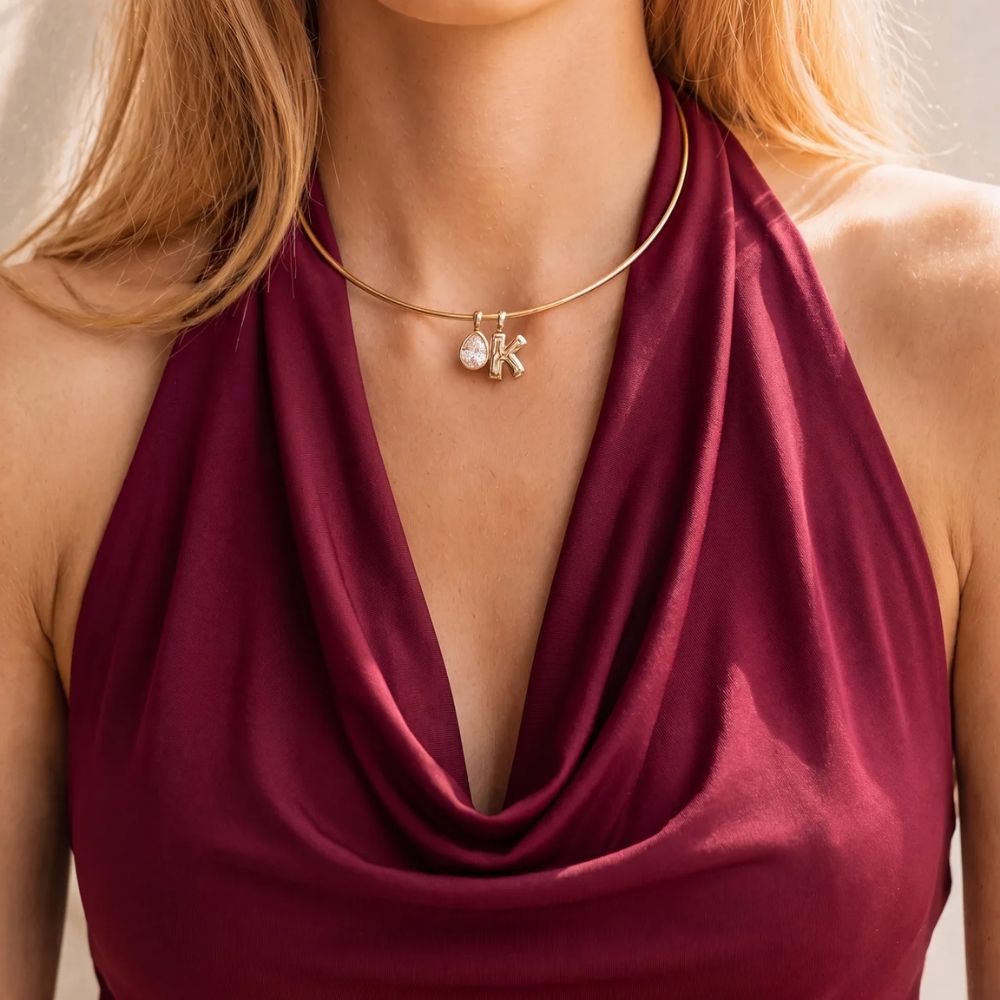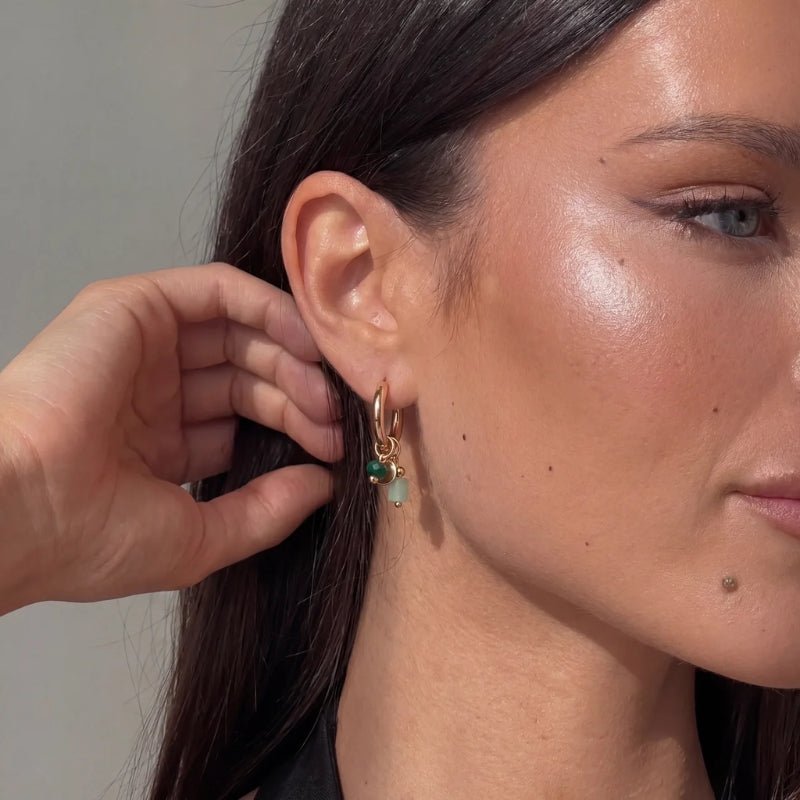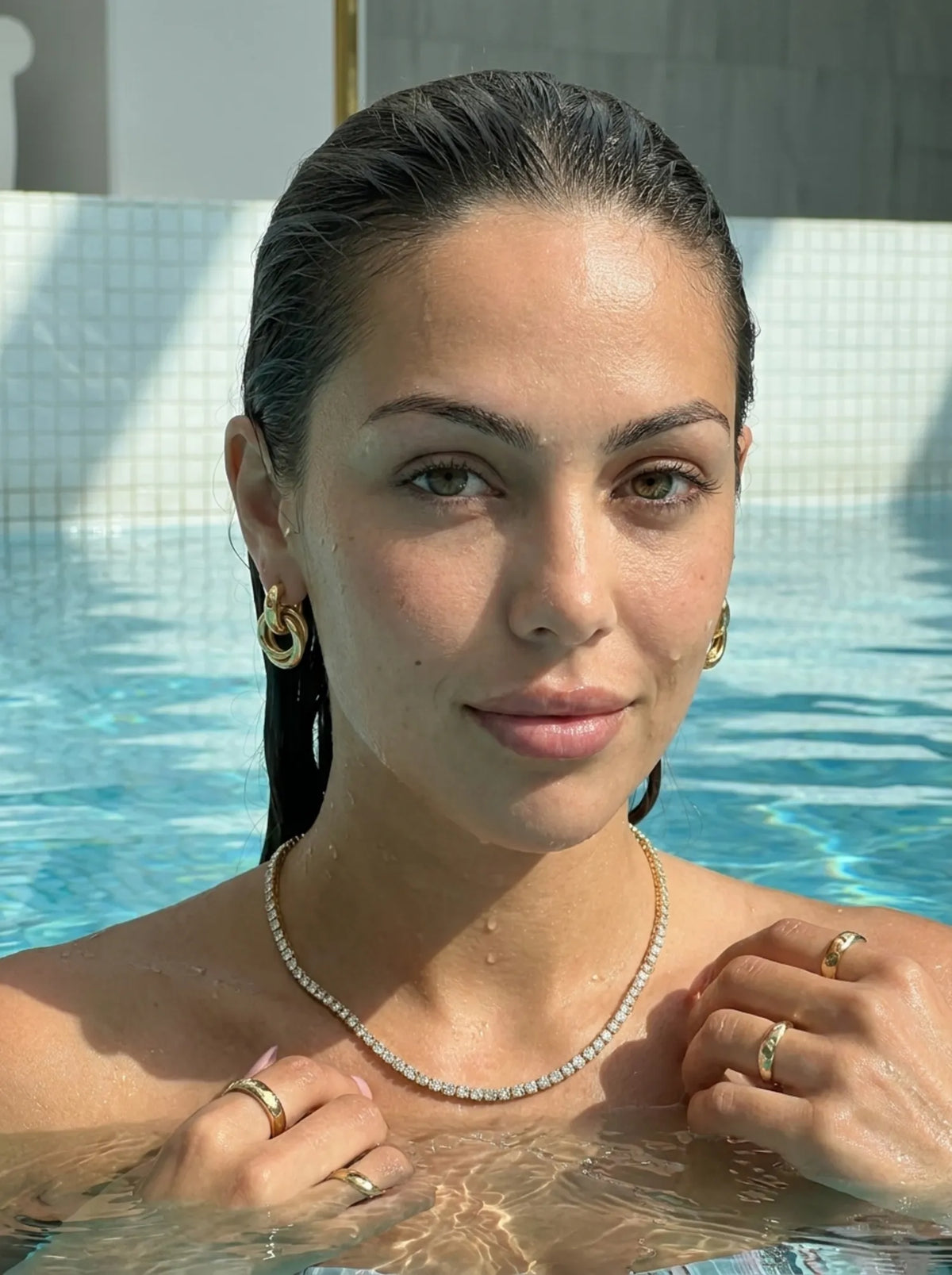
Is Stainless Steel Jewellery Good Quality? The Honest Answer

Is Stainless Steel Jewellery
Actually Good?
Somewhere between "cheap costume metal" and "the only metal that survives real life" sits the truth. Here it is, with the engineering shown.
Want the conclusion worn, not read? The waterproof gold collection is 316L throughout.
Where the Bad Reputation Came From
Stainless steel jewellery carries decades of baggage it no longer deserves, and understanding the baggage clears the question faster than any spec sheet.
The reputation formed in the metal's first jewellery era: chunky 2000s men's pieces, market-stall rings of unspecified alloys, and the general sense that steel was what you bought when you could not buy silver. The word "steel" itself did half the damage, kitchenware and scaffolding are poor brand ambassadors for jewellery, and early pieces' industrial styling confirmed the prejudice.
What changed was not marketing but metallurgy meeting fashion: surgical-grade 316L, the alloy hospitals and piercing studios already trusted, entered fine-styled jewellery through the waterproof movement, wearing PVD gold coats indistinguishable from precious pieces at a glance. The prejudice now runs a decade behind the product, and buyers who update fastest are simply the ones who read materials lines instead of memories.
What 316L Actually Is
Good quality starts with a named grade, and 316L is the name that matters.
316L is an austenitic stainless alloy: iron with roughly 16-18% chromium, 10-14% nickel and 2-3% molybdenum, the low-carbon ("L") variant chosen where corrosion resistance is critical. The chromium builds the trick that defines stainless: an invisible, self-healing oxide layer a few atoms thick that seals the surface and re-forms instantly when scratched. The molybdenum hardens that shield specifically against chlorides, sweat, sea water, pool chemistry, which is why this exact grade runs surgical implants, marine fittings and professional piercing jewellery.
Jewellery is a mild environment by those standards. A necklace faces sweat and shower gel, not autoclaves and saline drips, so 316L in jewellery operates far inside its engineering margins, effectively loafing. That headroom, more than any single property, is the honest answer to the quality question: the metal is over-qualified for the job.
Where Steel Beats Precious Metals
On the properties daily wear actually tests, the scoreboard is not close.
Corrosion and tarnish: steel does not tarnish in air like sterling or corrode against skin like brass, the passive layer simply refuses the chemistry. No polish economy, no green marks, no grey film.
Hardness and durability: steel resists the dents, bends and wear that soft precious metals accumulate. Thin steel rings survive knocks that deform gold ones; clasps and posts outlast their precious equivalents visibly.
Skin compatibility: the nickel is bound in the alloy matrix with release rates far below reaction thresholds for most wearers, the reason piercing studios default to it. Copper-free, lead-free, cadmium-free by specification.
Cost honesty: the raw alloy is inexpensive, which means design, finishing and construction, not metal weight, set the price. You pay for the made thing, not the melt value.

Where Steel Honestly Doesn't
A credible answer needs the other column, and steel has one.
Intrinsic value: steel carries none. Precious metals hold melt value, heirloom gravitas and hallmarking traditions; a steel piece's worth is entirely in its making and meaning, which matters for heirloom briefs and not at all for daily wear.
Resizing and rework: steel's hardness cuts both ways, traditional jewellers cannot easily resize, solder or rework it the way they service gold and silver. Buy the right size; alteration is not the safety net it is with precious metals.
Weight and warmth: some wearers love precious metal's heft and its particular warmth against skin; steel wears lighter and cooler. Pure preference, honestly noted.
The prestige register: for briefs where the hallmark IS the message, engagement traditions, milestone solid-gold gifts, steel does not compete and does not pretend to. The metals guide maps which briefs belong where.
The Sensitive Skin Case
For reactive skin, steel is not a compromise, it is frequently the prescription.
Most jewellery reactions trace to two culprits: nickel release from cheap alloys and copper corrosion from brass. 316L addresses both by construction: its nickel is locked in the austenitic matrix with release far below the thresholds that trigger most sensitivities, and it contains no free copper to green against skin acids. This is why piercing studios, the highest-stakes skin-contact jewellery context there is, standardised on the grade decades before fashion did.
Severe diagnosed nickel allergies remain the exception deserving titanium or verified nickel-free alternatives, and any new metal deserves a patch period. For the far larger population of "earrings always itch, rings always mark" wearers, the upgrade path is usually as simple as the alloy, per the sensitive skin guide.
Steel + PVD: The Gold Question
Most steel jewellery sold today wears gold, and the marriage is the modern category's entire story.
PVD bonds 18k gold colour onto the steel at molecular level, hard, bonded, engineered for water, turning an over-qualified base into a precious-looking whole that showers daily for years. The pairing solves each partner's weakness: steel gains gold's warmth, gold gains steel's invincibility, and the wearer gains the only combination in jewellery that asks for essentially nothing back. The physics live in the PVD explainer; the lifespan numbers in the longevity guide.
The honest asterisk travels with every finish: PVD resists wear, not deliberate abrasion. Beach sand and scouring pads beat any coating; ordinary life does not.
How to Buy Steel Well
Quality within the steel category varies exactly where buyers do not look. Four checks sort it.
Grade named: "316L" or "surgical steel" on the page; bare "stainless steel" may be a cheaper 200-series alloy with weaker corrosion resistance. Finish named: PVD or ion plating for gold tones; "gold colour" unspecified is paint-tier. Construction inspected: clasp action, post thickness, setting security, steel's virtues cannot rescue lazy assembly. Guarantee present: lifetime cover on a steel piece costs the brand little precisely because claims are rare; its absence on a "premium" steel piece is a tell.
Priced honestly, good steel jewellery runs £20 to £90 in the UK market: below that, check the grade; far above it, you are paying brand, not metal, sometimes worth it, always worth knowing.
So: Is It Good?
Collecting the columns into the one-paragraph answer the search deserved.
For daily-wear jewellery, pieces meant to live on skin through showers, gyms, seas and years, 316L stainless steel is not merely good; it is the best-fit metal currently available, and the PVD-gold pairing makes it beautiful enough that the fitness costs nothing visible. For heirloom, hallmark and melt-value briefs, precious metals keep their crown, honestly and permanently. The quality question was never steel versus gold in the abstract; it was always which job, and steel's job happens to be the one most jewellery actually does.
The Metals, on One Table
The full daily-wear scoreboard, every common jewellery metal, one honest grid.
| Property | 316L steel | Sterling 925 | Brass (plated) | Solid gold 14k+ |
|---|---|---|---|---|
| Tarnish in air | None | Yes, ongoing | Once plating wears | None |
| Green skin marks | Never | Rare | Common | Never |
| Daily showers | Yes | Discouraged | No | Yes |
| Polish/maintenance | None | Regular | Futile eventually | Minimal |
| Hypoallergenic | Yes (bound nickel) | Mostly | Poor | Yes |
| Resizable/workable | No | Yes | Yes | Yes |
| Intrinsic value | None | Moderate | None | High |
| Typical UK price | £20 to £90 | £30 to £150 | £10 to £60 | £300+ |
Read down the daily-wear rows and steel sweeps; read down the heirloom rows and gold does. The table is the article, compressed, and it explains why serious wardrobes increasingly hold both: steel for the life, precious for the legacy, and nothing at all for the middle rows brass occupies.
The Decade That Rehabilitated a Metal
Steel's jewellery redemption arc is recent enough to date precisely, and the milestones explain today's market.
The 2010s laid the groundwork invisibly: piercing culture normalised implant-grade steel against skin, and watchmaking's PVD finishes proved bonded gold could survive wrists for decades. The late 2010s waterproof movement connected the dots commercially, brands built entire identities on 316L-plus-PVD, and marketed the construction by name rather than hiding it. Then social media's durability-test genre did what no advertising could: filmed the metal keeping its promises in showers and seas, millions of views at a time, until "is it steel?" flipped from suspicion to specification. By the mid-2020s the alloy that once signalled budget had become the literate buyer's first question, and the market's materials disclosure improved across every construction because steel brands made naming the metal a competitive weapon. Reputations move slower than products, which is precisely why this article's search query still exists, and why its answer has been yes for years.
The Sustainability Sidebar
Steel's environmental case is strong and rarely told properly, so here it is in one honest paragraph each way.
In its favour: stainless steel is among the most recycled materials on earth, with functioning scrap markets and near-lossless recyclability, and durable steel jewellery's deepest green credential is longevity itself, every decade-long piece displaces the five-to-ten plated-brass purchases, and disposals, that fashion jewellery's churn otherwise generates. Landfill jewellery is overwhelmingly the cheap, failed kind; pieces that keep working stay out of the ground.
On the other side of the ledger: virgin steel production is energy-intensive, and jewellery-scale pieces rarely advertise recycled content the way precious-metal brands now do, a disclosure gap the industry should close. The balanced verdict mirrors the series' standing rule: recycled sourcing leads where you buy precious, durability leads where you buy daily, and the greenest piece in any material remains the one still being worn in 2036.
Three Stubborn Myths, Retired
The remaining folklore, addressed in one pass so the comment sections can rest.
"Steel jewellery sets off airport metal detectors." Jewellery-scale steel almost never does; scanners are tuned far above necklace mass. Wear it through, unlike the belt. "Magnets prove quality." Austenitic 316L is largely non-magnetic, but work-hardened parts (clasps, posts) can attract slightly, magnet tests reveal grade family, not quality, and fail as a fake-detector in both directions. "Steel turns skin green eventually." Green marks are copper chemistry; 316L contains no free copper and cannot produce them, ever. If a "steel" piece greens, the label lied about the alloy, which is an honesty problem, not a steel problem, and one more argument for buying where grades are named and guaranteed.
The Key Takeaways
The whole answer in five lines.
- The reputation is a decade stale: surgical 316L in styled jewellery bears no relation to the market-stall steel of memory.
- The grade is the guarantee: chromium's self-healing layer plus molybdenum's chloride armour make 316L over-qualified for jewellery's demands.
- It wins daily wear outright: no tarnish, no green, no polish economy, piercing-grade skin compatibility.
- It concedes the heirloom column: no melt value, no resizing, no hallmark gravitas, different briefs, different metals.
- Buy by the full sentence: 316L + PVD + guarantee is quality; any word missing deserves questions.
Frequently Asked Questions
Is stainless steel jewellery good quality?
For daily wear, excellent: 316L surgical grade resists tarnish, corrosion and skin reactions better than sterling or brass, and with PVD gold coating it holds its look for years of showers and gyms.
Is stainless steel jewellery cheap?
The raw alloy is inexpensive; the finished jewellery ranges £20 to £90 done properly. You pay for design, finishing and construction rather than melt value, which is honest pricing, not low quality.
Does stainless steel jewellery tarnish or rust?
316L does neither in normal wear: its chromium oxide layer self-heals and its molybdenum content specifically resists sweat and salt chemistry.
Is stainless steel jewellery OK for sensitive skin?
Usually the upgrade that ends the problem: bound nickel, zero copper, the same grade piercing studios use. Severe diagnosed nickel allergies remain the exception deserving titanium.
Is stainless steel better than sterling silver?
For maintenance-free daily wear, yes: no tarnish, no polishing, water welcome. Sterling keeps precious-metal status and traditional workability, different jobs, per our full comparison.
Can you shower with stainless steel jewellery?
Yes, daily: water, soap and shampoo are within design limits for 316L, with or without PVD coating.
Does gold PVD on steel look cheap?
Indistinguishable from precious pieces at conversational distance: the 18k coating is real gold colour, bonded hard. The visible difference over time actually favours steel, it still looks new.
Can stainless steel rings be resized?
Generally no, the hardness that protects them resists jewellers' tools. Buy accurate sizes or adjustable designs; alteration is not steel's safety net.
What is the difference between 316L and regular stainless steel?
316L adds molybdenum and drops carbon versus generic grades, dramatically improving resistance to sweat, salt and chlorine. Unnamed "stainless" may be a cheaper 200-series alloy.
Is stainless steel jewellery waterproof?
The metal is, inherently. "Waterproof jewellery" as a category means 316L plus a bonded finish like PVD, the pairing engineered for permanent wear.
Why do piercers use stainless steel?
Because healing skin is the harshest jewellery environment, and 316L's inertness and low nickel release pass it. Fashion jewellery inherits that medical pedigree.
Is steel jewellery worth gifting?
For daily-wear gifts, strongly: the recipient's habits cannot hurt it, and personalised steel pieces from £24 carry meaning without maintenance homework.
Wear the Proof
316L surgical steel under 18k gold PVD: the quality answer, worn daily, guaranteed for life.
Shop 316L + PVDThe metal face-off in full: steel vs sterling.