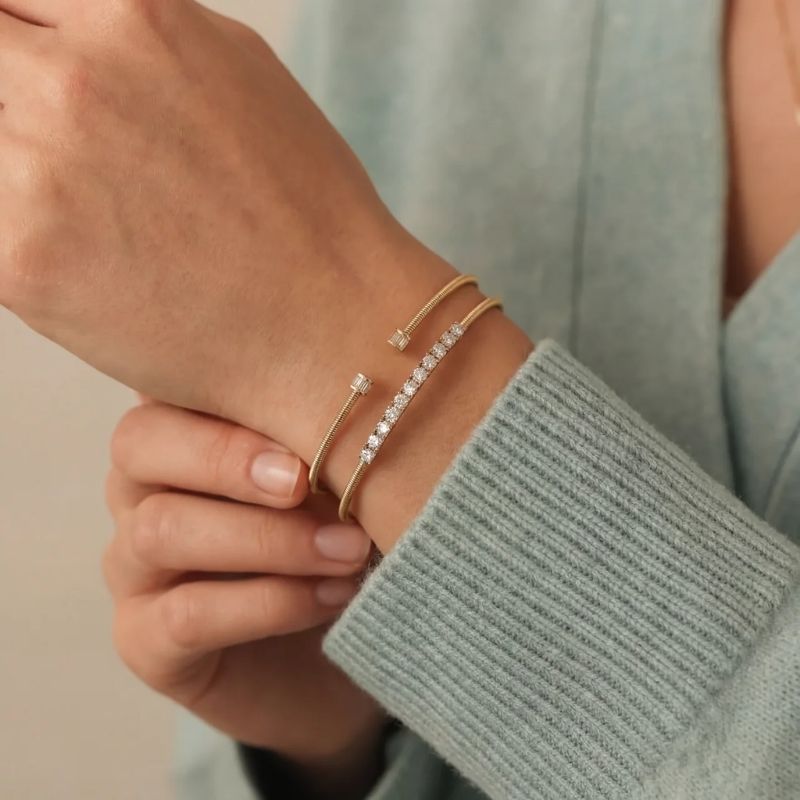
Jewellery Turning Green: Why It Happens and How to Fix It

Jewellery Turning Green:
Why It Happens and How to Fix It
That green mark on your finger is not dangerous, but it is annoying. Here is exactly why it happens, which metals cause it, and how to make sure it never happens again.
Why Does Jewellery Turn Your Skin Green?
It looks alarming, but the green mark left by a ring or bracelet is completely harmless. It is simply chemistry doing what chemistry does.
You put on a ring before heading out and by evening there is a faint green band around your finger. It happens to almost everyone at some point, and the culprit is nearly always the same element: copper. When copper comes into contact with moisture, sweat, or the natural acids on your skin, it undergoes a chemical reaction called oxidation. The result is copper chloride, a green compound that transfers onto your skin like a temporary stain.


Think of it like the Statue of Liberty. That famous green patina is exactly the same reaction, just on a much larger scale. Copper reacts with air and water over time, and the green layer forms on the surface. When the copper is sitting right against your skin, the green layer forms on you instead of on the metal.
Not everyone gets the green mark at the same rate. Several factors influence how quickly copper oxidises against your skin:
Skin acidity. Everyone has a slightly different pH level on their skin. If your natural pH is more acidic (which is perfectly normal and healthy), you will notice the green mark appearing faster. Some people can wear copper jewellery for days without a trace, while others see green within hours.
Sweat and moisture. Physical activity, humid weather, or even washing your hands creates the moisture that accelerates the chemical reaction. This is why you might notice the green mark more in summer or after a workout.
Lotions and products. Certain skincare products, perfumes, and hand creams contain chemicals that react with copper-based metals. Applying lotion and then putting on a ring is one of the fastest routes to a green finger.
Water exposure. Showering, swimming, or doing the dishes while wearing copper-containing jewellery gives the reaction everything it needs. Warm water and soap break down the thin protective layer on the metal, exposing fresh copper to your skin.

Which Metals Cause the Green Mark?
Not all jewellery is made equal. Some metals will always cause that green tint, while others are completely immune to it.
Understanding which metals are responsible helps you make smarter choices when buying jewellery. Here is a straightforward breakdown.
Copper
The number one offender. Pure copper and copper alloys will almost always leave a green mark, especially in warm or humid conditions.
Brass
Brass is a mixture of copper and zinc. Because it contains a high percentage of copper, it causes the green reaction just as easily.


Cheap Gold Plating
Many affordable "gold" rings are actually copper or brass with a thin gold layer on top. Once that layer wears off (and it always does), the copper base starts reacting with your skin.
Some Sterling Silver
Sterling silver is 92.5% silver and 7.5% other metals, often copper. While it is less common, sterling silver can sometimes leave a faint green or grey mark, especially if you sweat a lot.
316L Stainless Steel
Surgical-grade stainless steel contains no copper and does not react with skin. It is one of the most reliable metals for everyday jewellery.
Solid Gold (14k+)
Higher karat gold contains enough pure gold to resist oxidation. 14k and above will not cause green skin under normal conditions.
Platinum
Extremely inert and resistant to all chemical reactions. Platinum will never turn your skin green, though it comes at a premium price.
PVD-Coated Steel
PVD (Physical Vapour Deposition) bonds gold particles to stainless steel at a molecular level. The result is a barrier that never lets copper near your skin, because there is no copper to begin with.


The Heartline Ring
A delicate heart-shaped ring crafted from surgical-grade stainless steel with PVD gold coating. Personalise it with your initial or a meaningful date. Wear it in the shower, the pool, or the gym without worrying about green fingers.
Waterproof · Hypoallergenic · Personalised engraving available
£24.95
View The Heartline Ring


How to Fix Green Skin From Jewellery
Already got a green mark? Do not worry. It is temporary and easy to remove.
The green stain sits on the surface of your skin. It has not soaked in or caused any damage. Here are the simplest ways to get rid of it.


In most cases, this is all you need. Wash the area with regular soap and warm water, rubbing gently with your fingers or a soft cloth. The green mark should fade within a minute or two. Pat dry and you are back to normal.
If soap alone does not quite shift it, cut a lemon in half and rub the green area gently. The citric acid breaks down the copper chloride and lifts it from your skin. Rinse with water after about 30 seconds and the mark should be gone.
Mix a small amount of baking soda with water to create a paste. Apply it to the green mark, rub gently in circles for about 20 seconds, then rinse off. This method works well for stubborn marks that have built up over several days.
A cotton pad soaked in rubbing alcohol will dissolve the copper chloride quickly. Wipe the green area, then wash with soap and water. This is the fastest method, but be sure to moisturise afterwards as alcohol can dry out your skin.
Removing the green mark is easy, but having to do it every time you wear your jewellery gets tiring fast. The real solution is not a cleaning trick. It is choosing the right metal in the first place.
If you have a piece of jewellery that keeps turning your skin green, you have two options. You can try to create a barrier between the metal and your skin (more on that in a moment), or you can replace it with a piece that simply will not cause the reaction.


Lumine Band
A minimalist band with a warm gold finish that works just as well on its own as it does stacked. Built on a 316L stainless steel core with PVD coating, so there is zero copper and zero chance of green skin.
316L stainless steel · PVD gold finish · lifetime colour guarantee
£24.95
View Lumine Band


Metals That Never Turn Skin Green
If you want to avoid the green mark entirely, focus on these metals. They are chemically stable and will not react with your skin under any conditions.
Surgical-grade stainless steel (316L)
This is the metal used in medical implants, surgical tools, and high-end watches. It contains chromium, nickel, and molybdenum, but crucially, it contains no copper. The chromium forms an invisible oxide layer on the surface that protects it from corrosion, which is why it never reacts with your skin. It is also completely waterproof, so showering, swimming, and sweating will not cause any discolouration.
Solid gold (14k and above)
Pure gold (24k) is one of the most chemically stable elements on the planet. It does not oxidise or react with skin acids. The challenge is that 24k gold is too soft for everyday jewellery, so it is mixed with other metals to create 14k or 18k gold. At these karat levels, the gold content is high enough to prevent green skin, though 10k gold (which contains more copper) can occasionally cause a faint mark in humid conditions.
Platinum
Platinum is extremely dense and inert. It will never tarnish, corrode, or cause skin discolouration. It is the gold standard (ironically) for hypoallergenic jewellery. The downside is the price. Platinum rings typically cost several hundred pounds at minimum, which puts them out of reach for everyday accessories.
Titanium
Lightweight, strong, and completely biocompatible. Titanium is used in aerospace and medical implants for exactly these properties. It will never turn your skin green. The trade-off is that titanium cannot be resized, and it has a darker, more industrial look that does not suit every style.
PVD-coated stainless steel: the best of both worlds
This is where modern technology solves an old problem. PVD coating uses a vacuum chamber to bond gold particles directly to 316L stainless steel at a molecular level. The result is a piece that looks like real gold, feels like real gold, and will not turn your skin green because the base metal is copper-free stainless steel.
Unlike traditional gold plating (which sits on the surface and wears off), PVD coating is bonded into the metal itself. It resists scratching, water, sweat, and chemicals. And because the base is stainless steel rather than copper or brass, there is nothing underneath that could cause a green reaction even if the coating were to wear down over time.
For most people, PVD-coated stainless steel offers the best balance of appearance, durability, and price. You get the warm gold colour of 18k gold without the green surprise or the four-figure price tag.
| Metal | Turns Green? | Waterproof? | Price Range | Best For |
|---|---|---|---|---|
| Copper / Brass | Yes, quickly | No | £2, £15 | Costume jewellery only |
| Cheap gold plate | Yes, after coating wears | No | £5, £30 | Occasional, dry wear |
| Sterling silver | Sometimes (faint) | Partially | £20, £80 | Silver-tone lovers |
| 316L stainless steel | No, never | Yes | £15, £40 | Everyday, active wear |
| PVD-coated steel | No, never | Yes | £20, £50 | Gold look without the risk |
| Solid gold (14k+) | No | Yes | £150, £1,000+ | Investment pieces |
| Platinum | No, never | Yes | £300, £2,000+ | Premium, lifetime wear |
| Titanium | No, never | Yes | £30, £100 | Lightweight, modern style |

Gemini Stackable Rings
Two complementary bands designed to sit together or apart. Stacking rings is one of the easiest ways to build a personal look, and with PVD-coated stainless steel, you can stack without ever worrying about green lines between your rings.
Sold as a set · PVD-coated 316L steel · Personalisation available
£29.99
View Gemini Stackable Rings


Looking for jewellery that never turns green? Every Moonela piece is built on surgical-grade stainless steel.
Browse the CollectionNecklaces and Bracelets That Won't Turn Green
The green mark is not limited to rings. Necklaces can leave a green line across your chest, and bracelets can stain your wrist. The same principles apply.
Necklaces sit against a large area of skin, often in a spot that gets warm and sweaty, especially under clothing. If a necklace contains copper or is made from cheap gold-plated brass, you will eventually notice a faint green line where the chain rests. This is particularly common with longer chains and pendant necklaces that sit between the collarbones.
Bracelets and bangles face the same challenge. Your wrist is one of the warmest parts of your body, and the constant movement means the metal is always rubbing against fresh skin. Cheap alloy bracelets can leave green marks within a single day of wear.
The solution is the same as with rings: choose waterproof jewellery made from stainless steel or PVD-coated metal. A necklace that won't turn green is not a luxury item. It is simply a necklace made from the right material.
Herringbone chains, for example, lie flat against the skin and have a lot of surface contact. That makes them one of the styles most likely to cause a green mark if they are made from the wrong metal. But when built on a stainless steel core with PVD coating, they can be worn every single day, through showers, workouts, and everything in between, without leaving a trace.

The Herringbone Chain
A classic herringbone chain with a warm 18k gold PVD finish. Lies flat against the skin for a sleek, understated look. Built on a surgical-grade stainless steel core, so it will never leave a green line on your neck or chest, no matter how long you wear it.
Waterproof · Hypoallergenic · Available in two lengths
£39.99
View The Herringbone Chain


"Real gold colour without the green surprise. That is the whole point of PVD-coated stainless steel, and once you try it, you will never go back to plated jewellery."
Frequently Asked Questions
We get asked about green skin and jewellery all the time. Here are honest answers to the most common questions.
Is the green mark from jewellery dangerous?
No. The green mark is copper chloride sitting on the surface of your skin. It is not toxic, it is not an infection, and it will not cause any long-term damage. It washes off with soap and water. If you experience itching, redness, or swelling alongside the green mark, that is more likely a nickel allergy, which is a separate issue. In that case, switch to hypoallergenic jewellery made from surgical-grade stainless steel or titanium.
Does real gold turn your skin green?
Solid gold at 14k and above will not turn your skin green under normal conditions. However, 10k gold contains a higher percentage of copper and other alloy metals, so it can occasionally cause a faint green mark, especially in humid weather or if your skin is particularly acidic. If you want gold that will never cause the green reaction, look for 14k or higher, or choose PVD-coated jewellery that gives you the gold look without any copper content.
Does stainless steel turn your skin green?
No. Surgical-grade 316L stainless steel contains no copper, which is the element responsible for the green reaction. It is one of the safest metals for everyday wear and is widely used in medical devices for exactly this reason. Even with constant water exposure, sweat, and skin contact, stainless steel will not discolour your skin.
How do I stop jewellery from turning my skin green?
The most reliable solution is to wear jewellery made from metals that do not contain copper. 316L stainless steel, PVD-coated steel, solid gold (14k+), platinum, and titanium will not cause green skin. Temporary fixes like clear nail polish or jewellery sealant can help with existing pieces, but they wear off and need regular reapplication. The long-term answer is simply choosing the right metal.
Does sweat make the green mark worse?
Yes. Sweat contains salt and acids that accelerate the copper oxidation reaction. This is why you might notice the green mark more during summer, after exercise, or when wearing jewellery in warm environments. If you are active and sweat regularly, copper-based jewellery will turn your skin green much faster than it would for someone with a drier lifestyle. Waterproof jewellery made from stainless steel is the best choice for active wear.
Will PVD-coated jewellery turn my skin green?
No. PVD-coated jewellery is built on a stainless steel base, which contains no copper. The PVD coating itself is bonded to the metal at a molecular level and does not contain copper either. Even if the coating were to eventually wear after years of heavy use, the base metal underneath is still stainless steel, so there is nothing that could cause a green reaction at any point in the jewellery's lifetime.
Jewellery That Never Turns Green
Every Moonela piece is crafted from surgical-grade 316L stainless steel with PVD gold coating. No copper. No green marks. No compromises. Just jewellery you can wear every day, everywhere, with complete confidence.
Shop the CollectionFree UK shipping · 30-day returns · Stacking guide
Related Reads
Explore more from our style guides to help you choose, wear and care for your jewellery with confidence.