Earrings That Don't Tarnish: The Complete UK Guide

Earrings That Don't Tarnish: The Complete UK Guide
You have tried the high street pairs that turned green within a week. This guide covers the metals, coatings, and styles that actually last, so you can stop replacing earrings and start wearing them with confidence.
Why Do Earrings Tarnish?
Understanding what causes tarnish is the first step towards never dealing with it again.
We have all been there. You pick up a gorgeous pair of gold earrings from a market stall or a high street favourite, and within days the colour starts to shift. That warm gold becomes dull, greenish, or patchy. It is frustrating, and it makes you question whether affordable jewellery is even worth buying.
The short answer is that tarnish is a chemical reaction. When certain metals are exposed to oxygen, moisture, and sulphur compounds in the air, they undergo oxidation. The surface layer reacts and forms a discoloured film. Silver tarnishes to black, copper turns green, and brass develops a murky patina that nobody asked for.


But it is not just air that causes the problem. Your body plays a role too. Sweat contains salts and acids that speed up the process, especially during warmer months or when you exercise. Perfume, hairspray, moisturisers, and even chlorinated pool water all accelerate tarnishing. If you have ever noticed one earring tarnishing faster than the other, it is likely because one ear produces slightly more moisture than the other.
The biggest culprit, though, is the metal itself. Many affordable earrings are made from base metals like brass, copper, or zinc alloy, then given a thin gold or silver plating. That plating wears through over time, exposing the reactive metal underneath. Once that happens, tarnish sets in fast.
Exposure to air and moisture triggers a chemical reaction on the metal surface, dulling its finish over time.
Sweat, natural oils, and your skin's pH level all interact with metals. More acidic skin speeds up tarnishing noticeably.
Perfume, hairspray, cleaning products, and chlorine strip protective layers and eat into plating.
Most high street earrings use electroplating that is just a fraction of a micron thick. It simply does not last.
So what is the solution? It comes down to choosing metals and coatings that resist these reactions entirely. And that is exactly what we will cover next.

The Best Metals for Tarnish-Free Earrings
Not all metals are created equal. Here is what actually holds up in the UK climate.
If you want earrings that genuinely do not tarnish, you need to start with the right base material. Some metals are naturally resistant to corrosion, while others rely on advanced coatings to create a lasting barrier. Here is a breakdown of the best options available in the UK right now.
Medical-grade stainless steel is one of the most durable and affordable options for everyday earrings. It contains chromium, which forms an invisible protective layer on the surface that prevents rust and tarnish. It will not react with water, sweat, or most household chemicals. The trade-off is that stainless steel has a silver tone, so if you want a gold look, it needs a coating.


This is where things get really interesting. PVD (Physical Vapour Deposition) is an industrial coating process that bonds a thin layer of gold-toned material to stainless steel at the molecular level. Unlike traditional electroplating, which simply sits on top of the metal, PVD becomes part of the surface. The result is a gold finish that resists scratching, does not peel, and will not tarnish with normal wear. Most waterproof earrings from quality brands use this exact process.
Titanium is incredibly lightweight and completely corrosion-resistant. It is often used in medical implants, which tells you everything you need to know about its durability. It is an excellent choice for anyone with metal sensitivities, though it tends to come in a limited colour range.
Solid gold earrings will not tarnish, full stop. The higher the carat, the more pure gold content, and the less likely any reaction. However, solid gold comes at a significantly higher price point. A pair of 18ct gold huggies can easily cost ten times what a PVD-coated pair costs, with very little practical difference in how they look or perform day to day.
For most people, PVD-coated stainless steel hits the sweet spot. You get the warm gold colour, genuine tarnish resistance, and a price that does not make you wince. It is exactly what we use across the Moonela earring collection, and it is why our customers can shower, swim, and sleep in their earrings without a second thought.

Classic Gold Filled Earrings
A timeless pair that bridges the gap between solid gold and plated jewellery. Gold filled means the outer layer is substantially thicker than standard plating, giving you lasting colour and a beautiful weight on the ear.


Earring Styles That Last
The shape and design of your earrings matters just as much as the metal they are made from.
When it comes to longevity, not all earring styles are equal. Some designs are inherently more durable because of how they sit on the ear, how they close, and how much surface area is exposed to moisture and friction. Here is what to look for if you want earrings that stay beautiful for years.
Huggie Earrings
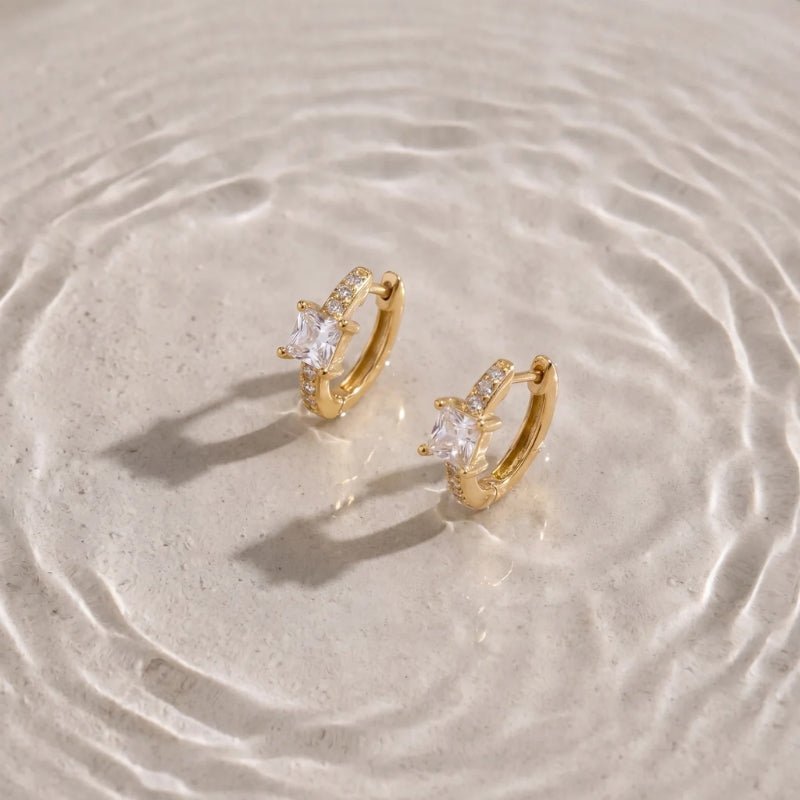
Huggies are small hinged hoops that sit snugly against the earlobe. Because they have a secure clasp mechanism and minimal protrusion, they are less likely to catch on clothing, hair, or pillows. This means less mechanical wear on the finish. They are also brilliantly comfortable for sleeping in, which is a real advantage if you prefer to keep your earrings in around the clock. If you are after gold earrings that don't tarnish UK shoppers can actually wear 24/7, huggies are the go-to style.
Hoop Earrings
Hoops are a classic for good reason. Larger hoops do experience more movement and friction where they pass through the piercing, so the quality of the hinge and clasp matters. With PVD-coated stainless steel hoops, the coating covers the entire surface, including the post, so you will not see wear marks appearing after a few months like you would with plated brass.
Stud Earrings
Studs are the most low-maintenance earring style. They sit flat against the ear, have very little surface area exposed to friction, and the post is usually the only part in constant contact with skin. A good pair of tarnish-free studs can genuinely last for years without any visible change. They are ideal for second and third piercings too, where you might not swap them out as often.
Whichever style you choose, the key is making sure both the visible part and the post are made from the same tarnish-resistant material. Some brands use quality metals for the decorative front but cheaper alloy for the post and butterfly back. That is where reactions and tarnishing start.

Moonstone Hoop Earrings
Natural moonstone set into waterproof gold hoops. The iridescent flash of the stone catches the light beautifully, and the PVD-coated steel means you never have to worry about the gold fading or reacting with your skin.


The Strata Hoops
Layered texture gives these hoops a sculptural edge. Made from 316L stainless steel with PVD gold coating, they bring visual interest without bulk. The textured surface actually helps mask any micro-scratches from daily wear, keeping them looking fresh for longer.


Earrings for Sensitive Ears
If your ears react to certain jewellery, you are not alone. Here is how to find earrings that will not irritate your ears.
Roughly one in five people in the UK have some degree of nickel sensitivity. It is the most common contact allergy associated with jewellery, and it can cause redness, itching, swelling, and even blistering around the piercing. The problem is that nickel is used as a strengthening agent in a huge range of jewellery alloys, including some that are marketed as "gold" or "silver".
The good news is that choosing earrings that won't irritate ears is straightforward once you know what to look for. Stick to these materials and you should be completely fine:


Contains trace nickel but in a form that is locked into the alloy structure. The vast majority of people with nickel sensitivity can wear it without any reaction at all.
Completely nickel-free and the most biocompatible metal available. Used in surgical implants for this exact reason.
The PVD layer creates a physical barrier between your skin and the metal underneath. No direct contact means no reaction.
Higher carat gold contains very little nickel. 14ct and above is generally safe for sensitive ears, though some 9ct alloys may still cause issues.
What you want to avoid is anything described as "gold plated" without specifying the base metal. If the base is brass or zinc alloy, the plating will eventually wear through and expose your skin to the reactive metal underneath. Similarly, be cautious with sterling silver. While 925 silver is generally well-tolerated, it does tarnish, and some people react to the copper content in the alloy.
At Moonela, every pair is made from 316L stainless steel with PVD gold coating, which means they are both tarnish-free and hypoallergenic. We regularly hear from customers who had given up on wearing earrings entirely because of reactions, only to find they can wear ours all day and all night without a hint of irritation.


The Ripple Huggies
Gentle wave texture on a compact huggie frame. These sit flush against the ear and the smooth inner surface means zero irritation, even on the most sensitive piercings. Customers with nickel allergies consistently rate these as the most comfortable earrings they have ever worn.


Ready to try earrings that genuinely never tarnish?
Browse the Collection"The best earrings are the ones you forget you are wearing, because they never give you a reason to think about them."
How to Keep Your Earrings Looking New
Even the most durable earrings benefit from a little care. Here is how to keep them at their best.
One of the best things about tarnish-free earrings is that they require very little maintenance. You will not need polishing cloths, anti-tarnish strips, or special storage solutions. But a few simple habits will keep them looking absolutely pristine for years to come.
Daily Wear Tips
With PVD-coated waterproof earrings, you really can wear them in the shower, to the gym, and to bed. The coating is designed to handle all of that. However, if you want to go the extra mile, try to apply perfume and hairspray before putting your earrings in. These products will not damage PVD coating the way they destroy regular plating, but keeping chemical contact to a minimum is always a sensible approach.
Cleaning
A quick rinse under warm water and a gentle wipe with a soft cloth is all you need. For a deeper clean, use a tiny drop of mild soap, rinse thoroughly, and pat dry. Avoid abrasive cleaners, toothpaste (despite what the internet says), or ultrasonic cleaners, as these can dull the surface over time. You can read our full waterproof jewellery care guide for more detailed instructions.
Storage
When you do take your earrings off, store them somewhere dry. A small jewellery box, a lined pouch, or even a dedicated compartment in your bathroom cabinet works perfectly. The main thing is to keep them separate from other jewellery to avoid scratching. While PVD coating is impressively hard, harder materials like diamonds or rough gemstones can still leave marks if they are all jumbled together.
What to Avoid
There are very few things that can damage quality tarnish-free earrings, but it is worth noting a couple. Strong chemical solvents, bleach, and acetone-based nail polish remover can potentially affect any coating over time. And while PVD-coated earrings are scratch-resistant, they are not scratch-proof. If you drag them across a rough surface or catch them on something sharp, you may see fine marks. That said, normal daily wear, including exercise, swimming, and sleeping, will not cause any issues at all.

The Solace Huggies
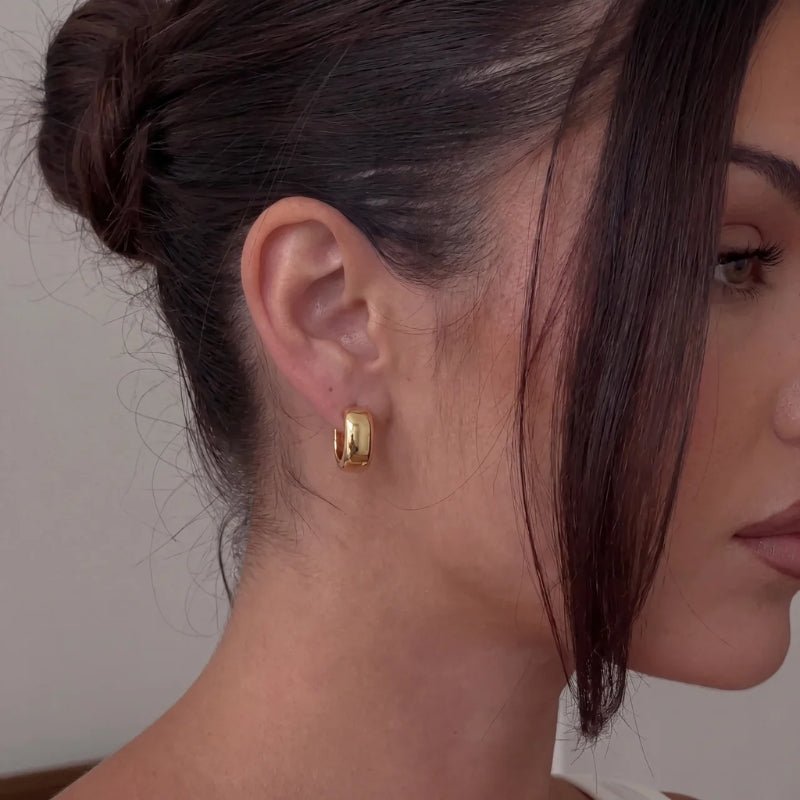
Clean lines and a polished gold finish make these the ultimate everyday huggie. Slim enough for stacking in second or third piercings, substantial enough to wear alone. The smooth contour sits perfectly against the ear with no edges to catch or snag.


Frequently Asked Questions
Everything you need to know about earrings that do not tarnish, answered clearly and honestly.
What are the best earrings that don't tarnish?
The best tarnish-free earrings are made from either solid gold, titanium, or 316L stainless steel with PVD gold coating. PVD-coated stainless steel offers the best balance of durability, appearance, and affordability. The coating bonds at a molecular level and resists scratching, moisture, and chemical exposure far better than traditional plating.
Can I shower with tarnish-free earrings?
Yes. If your earrings are made from stainless steel with PVD coating, you can absolutely shower with them on. The coating is waterproof and will not degrade from regular water exposure. In fact, many of our customers never take their earrings off at all, including in the shower, the pool, and the sea.
How long does PVD gold coating last?
With normal everyday wear, PVD gold coating lasts for years. It is significantly harder than traditional electroplating and does not peel or flake. Most customers report their PVD-coated earrings looking identical to the day they bought them after twelve months or more of continuous wear.
Are gold-plated earrings the same as tarnish-free?
No, and this is one of the most common misunderstandings. Standard gold plating is extremely thin and wears away with daily use, exposing the base metal underneath. Tarnish-free earrings use either solid gold, PVD coating, or naturally resistant metals like titanium and stainless steel. Always check the specific coating method rather than relying on "gold-plated" as a descriptor.
Will tarnish-free earrings work if I have a nickel allergy?
In most cases, yes. 316L stainless steel contains trace nickel in a form that is bound within the alloy, meaning it does not leach onto the skin. PVD coating provides an additional barrier. Titanium is completely nickel-free. However, if you have a severe nickel allergy, titanium or high-carat solid gold are the safest choices.
What is the difference between waterproof and tarnish-free earrings?
Waterproof earrings are designed to withstand exposure to water without damage. Tarnish-free earrings resist discolouration from air, moisture, and chemicals. In practice, well-made PVD-coated stainless steel earrings are both waterproof and tarnish-free. The two qualities tend to go hand in hand because the same properties that prevent water damage also prevent oxidation and tarnish.
Earrings You Never Take Off
Every pair in the Moonela collection is waterproof, tarnish-free, and hypoallergenic. Designed to be worn every single day, through every part of your life, without ever losing their shine.
Shop EarringsRelated Reads
Explore more from the Moonela journal to help you find your perfect everyday jewellery.
Hypoallergenic Jewellery UK: The Complete Guide
What Is 18K Gold Plated Jewellery?